Celebrate birthdays uniquely by wishing friends and loved ones “Happy Birthday” in different languages. This adds flair and diversity to their special day.

Celebrate with Global Flair
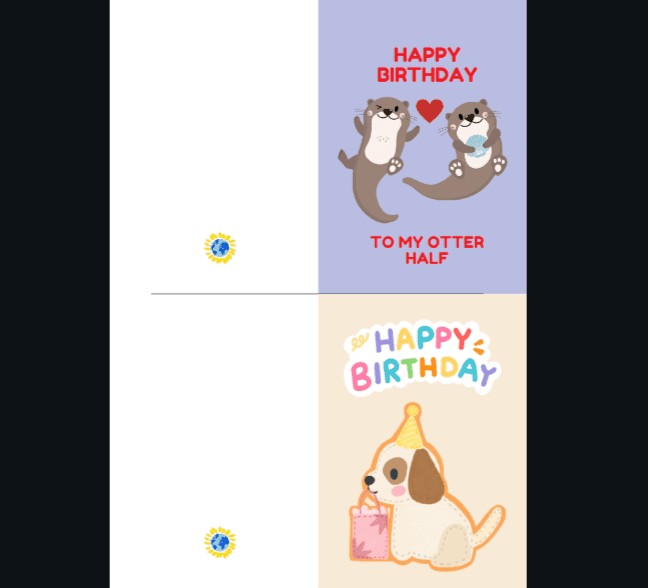
To celebrate, our talented Mondosol card creators have made some birthday cards. These cards say happy birthday in other languages, perfect for your newfound knowledge.
Create a Birthday Card
Answer all the questions to draw your character and describe it using the information from the questions. Or simply use one Ready to print card.
Saying “Happy Birthday” in popular languages
Sending birthday wishes in someone’s native language is super important! “Happy Birthday” in English is popular. Mixing it up and using other languages makes the celebration feel more special. It also adds a personal touch.

- In Spanish, it’s “Feliz cumpleaños.” This phrase is often used in Latin America and Spain. Birthdays are celebrated there with music and traditional dances.
- For French speakers, “Joyeux anniversaire” and “Bon anniversaire” are elegant phrases. They embody the joy of the celebration. These phrases are complemented by delicious birthday cakes and champagne toasts.
- In Mandarin Chinese, “Shēng rì kuài lè” which reflects the importance of family and tradition in Chinese culture.
- German — Alles Gute zum Geburtstag
- Italian — Buon compleanno
- Portuguese — Feliz aniversário
- Swedish — Grattis på födelsedagen
- Dutch — Gefeliciteerd
- Norwegian — Gratulerer med dagen
- Turkish — Doğum günün kutlu olsun
- Polish – Sto lat
- Danish — Tillykke med fødselsdagen
- Russian — С Днём рождения
- Japanese (casual) – お誕生日おめでとう (otanjoubi omedetou)
- Chinese – 生日快乐 (shēngrì kuàilè)
Celebrating Special Days Worldwide
We’ll explore unique birthday greetings across cultures, from “Feliz cumpleaños” in Spanish to “Joyeux anniversaire” in French.

Discovering these phrases can enrich your linguistic skills and deepen your appreciation of global traditions, making every birthday celebration special.
Importance of saying “Happy Birthday” in different languages
Birthdays are celebrated worldwide, marking the special day a person enters the world. Each culture has unique ways of celebrating, filled with heartfelt wishes and gifts.
Saying “Happy Birthday” in someone’s native language shows respect for their heritage and makes them feel valued. So learning this phrase in various languages enhances cultural understanding and fosters global connections. In conclusion exploring birthday customs from different cultures enriches our experiences.
Unique birthday traditions around the world
While the wish to celebrate birthdays is universal, traditions vary widely across cultures.
In Japan, birthdays are celebrated with “Tanjōbi,” featuring a red-and-white sponge cake called “Castella,” symbolizing good luck. So the birthday person receives a “Tanjōbi-presen,” a carefully wrapped gift.

In India, vibrant customs include the “Puja.” It is a religious ceremony involving prayers, incense, and offerings to deities. In fact this practice is believed to give blessings.

In Nigeria, celebrations often unite the community with traditional dances, drumming, and a special dish, “Jollof rice.” So the birthday person may wear vibrant traditional attire to highlight the occasion.

Cultural considerations when celebrating birthdays in different countries
When celebrating birthdays across cultures, it’s vital to respect different traditions. In fact i some cultures, the birthday person hosts the event, while in others, family and community honor them.

In many Asian cultures, elder birthdays are marked with great respect, and also younger members often organize the celebrations.

The timing and duration can also vary. In fact, some cultures celebrate for days. Others focus on the specific moment of birth. Recognizing these differences helps make birthday wishes more meaningful.

How to learn and pronounce “Happy Birthday” in different languages
Mastering the pronunciation of “Happy Birthday” in different languages is a rewarding way to engage with various cultures.

Listening to native speakers through audio resources or multilingual friends can enhance your learning. So breaking the phrase into smaller parts and practicing out loud helps improve pronunciation.
Overall, language learning is a patient journey, and speaking in someone else’s language adds joy to the effort.
Fun facts about celebrating birthdays globally
As we explore global birthday celebrations, we discover fascinating cultural traditions.
In Thailand, a person’s birthday color is linked to their birth day. For instance, Monday corresponds to yellow. Wednesday aligns with green.

Germany boasts detailed “Geburtstagskuchen” with intricate designs, treating the cake’s presentation as vital to the celebration.

In many Latin American countries, the birthday person wears a “cumpleañero” or “cumpleañera.” It is a vibrant crown or sash. It symbolizes their special day.

These examples highlight the diverse customs that enrich our understanding of worldwide birthday celebrations.
Celebrating other special occasions around the world
While birthdays are universally celebrated, many cultures have special days of significance.
The Lunar New Year, in Asian countries, brings families together with traditional dances, red envelope exchanges, and symbolic dishes.

In the Middle East, Eid al-Fitr and Eid al-Adha are marked by prayers, feasting, and strengthening community bonds.

In Africa, the concept of “Ubuntu” shows how communal celebrations, like a child’s birth, unite entire communities.

Understanding these diverse celebrations enriches our cultural knowledge and appreciation for global diversity.
Connecting with people from different cultures through special days
Celebrating special days, like birthdays, in different languages helps bring people together. Saying “Happy Birthday” in someone’s native language shows respect for their culture, making them feel valued.

These celebrations allow us to learn from each other and build friendships. Embracing diverse ways to celebrate fosters unity and a better understanding of our shared humanity.

Conclusion: Embracing diversity in celebrations
In our changing world, celebrating special days in different languages fosters connections and understanding of cultures. Saying “Happy Birthday” in someone’s language enhances inclusivity and appreciation of uniqueness, adding joy and enriching our diverse world.

People Also Read
Discover more from Mondosol
Subscribe to get the latest posts sent to your email.
This article is such a refreshing reminder of how birthdays transcend cultures, yet each one adds its own unique flavor to the celebration. Reading the Marathi section instantly brought back memories of wishing my best friend in college—“तुला आयुष्यभर हसत रहा आणि तुझं स्वप्न पूर्ण होवो”—which always made our wishes feel more rooted and heartfelt than a generic English line. ( https://marathibirthdaywish.com/)
Thank you so much for sharing this beautiful memory, Hanmy! 🙏✨ Your comment perfectly captures what I hoped to convey – how our native languages and cultural traditions add such depth and authenticity to our celebrations.
The Marathi birthday wish you shared with your college friend sounds absolutely heartfelt! There’s something so special about expressing wishes in our mother tongue – it carries emotions that sometimes get lost in translation. 💫
I’m so glad this article brought back those wonderful memories for you. It’s exactly these personal connections and cultural bridges that make birthdays (and life!) so much richer. 🌍
Thank you for taking the time to read and share your story – it means the world to me! 🤗
Hannry! 🌟
Wow, thank you for sharing that beautiful Marathi birthday wish! ” तुला आयुष्यभर हसत रहा आिण तुझं स्वप्न पूण होवो” – what a heartwarming expression!
Your comment perfectly illustrates the magic of language – how our mother tongue carries emotions that transcend simple translation. It’s these personal, cultural nuances that make communication so rich and meaningful.
Thank you for bringing such a special moment to life and for connecting so deeply with the article. Your story is exactly why I love exploring languages and cultural connections!
Warmest wishes,
Elio 🌍
Reading about these global traditions reminded me how Marathi birthdays also weave prayers and offerings into the day, keeping it rooted in family and faith. I recently adapted a traditional blessing on https://happybirthdaywishmarathi.com for a family birthday and it felt sincere. Even a short ritual, like lighting incense before cutting cake, can bridge modern fun with cultural depth.
Hi Liam,
What a beautiful reflection! 🙏 You’ve captured something I’m deeply passionate about – the way cultural rituals and traditions ground celebrations in meaning and connection. The image of lighting incense before cutting cake is so powerful: it honors the past while embracing the present moment.
This is exactly what I believe education and celebration should be about: not abandoning tradition for modernity, but weaving them together thoughtfully. Your family is lucky to have someone who understands that depth. The fact that you adapted a traditional blessing and felt that sincerity – that’s where real meaning lives.
Thank you for sharing this perspective and for keeping cultural traditions alive in your celebrations. Your family’s approach is a beautiful example of honoring heritage while creating new memories. 🌸
Warmly,Elio
This article on Wedding Anniversary Wishes is absolutely beautiful and filled with heartfelt feelings! 💕 Each message shines with love and sincerity — you can truly sense the care and thought behind every word. I was looking for the right wish to send to my best friend on her anniversary, and your lovely collection inspired me perfectly. Thank you for sharing such thoughtful and creative ideas — I’ll definitely be visiting again for more amazing anniversary messages. (https://weddinganniversarywishes.org/)
Hi Sheedaa,
Thank you so much for these kind words! 💕 Knowing that you found the perfect wish for your best friend’s anniversary is such a gift to me. Those moments when words finally capture what our hearts are feeling – that’s the magic I’m always chasing.
Your friendship sounds beautiful, and I’m honored that Mondosol could be part of celebrating that bond. Please come back anytime you need words for life’s special moments – whether it’s anniversaries, birthdays, or just because. That’s what this community is all about!
Wishing you and your dear friend all the happiness in the world. 🎉
Warmly,Elio
💖 I really loved reading these Heartfelt Birthday Quotes! Each quote is thoughtfully written, filled with love, kindness, and genuine emotion — just what’s needed to make any birthday wish truly special. 🎉 It’s amazing how these words capture the feelings we often can’t express ourselves. I’ve kept a few that touched my heart to share with my dear ones. 🌸 Thank you for putting together such a lovely and inspiring collection — it truly brightened my day and made me smile(https://zdnemnarodzhennia.com/)
Hi Jani,
Your comment just made my day! 💖 This is exactly why I create this content – to help people express the love and warmth they feel but sometimes struggle to put into words. The fact that you’ve kept a few quotes to share with your dear ones means everything to me.
Birthdays are such beautiful moments to celebrate connection, and knowing that my words helped you find the perfect way to express your feelings is truly heartwarming. Please do come back and share how your loved ones react – I’d love to hear their stories! 🌸
Thank you for spreading kindness and love. The world needs more of that energy!
Warmest wishes,Elio