

Sleep deprivation happens when someone doesn’t get enough good sleep, causing annoying symptoms that can mess up their day and make existing health issues worse. The good news is that this problem is usually fixable.
People Also Ask
What can I expect if I have this condition?
If you’re not getting enough sleep, you’ll start off feeling tired, but as you keep losing sleep, things can get pretty rough.
Serious sleep deprivation can make it hard to stay awake during the day and mess with your daily routine.
If it goes on for a long time or gets really bad, it might even mess with your brain, but getting enough sleep can help reverse that.
People who don’t get enough sleep often don’t realize how much it’s affecting their body and mind.
How long does sleep deprivation last?
Sleep deprivation can really mess you up if you don’t get enough shut-eye. It could be a single night or go on for weeks, months, or even years. If you’re dealing with sleep deprivation, catching some good z’s can help you bounce back. But if it’s really bad or has been happening for a long time, it might take several nights — or even up to a week — for you to get back on track.
What is the outlook for this condition?
The outlook for sleep deprivation can vary based on the cause, severity, duration, overall health, and other conditions. While not usually directly dangerous, it can pose risks if it interferes with tasks requiring full attention, such as driving.
How do I take care of myself?
It’s super important to make sure you get enough good sleep and follow some sleep hygiene tips, with help and advice from a healthcare provider.
When should I see my healthcare provider?
You gotta see your doctor if you’re dealing with sleep deprivation and symptoms of sleep apnea. And if your sleep deprivation doesn’t improve, even with better sleep habits, then it’s definitely time to pay your doctor a visit.
When should I go to ER?
Sleep deprivation isn’t something that will land you in the ER right away, but it can up your chances of a heart attack or stroke, which are serious and need immediate attention.
Overview
What is sleep deprivation?
Sleep deprivation happens when someone just doesn’t get enough sleep. It could be a short-term thing, messing with you for a night or two, or it could stick around for weeks or even months. There are loads of reasons why it happens, some not a big deal, but it’s also a major sign of certain health issues.
Sleep is crucial for everyone.
The amount of sleep you need changes as you get older. Some folks need extra sleep to feel totally rested, while others can get by with less. If you notice any changes in your sleep, it’s a good idea to chat with a doc about it.
The average daily amount of sleep needed, by age, is:
- Newborns (up to 3 months old): 14 to 17 hours.
- Infants (4 to 12 months old): 12 to 16 hours, including naptime.
- Young children (1 to 5 years old): 10 to 14 hours, including naptime.
- School-aged children (6 to 12 years old): 9 to 12 hours.
- Teenagers (13 to 18 years old): 8 to 10 hours.
- Adults (18 years and up): 7 to 9 hours.
Sleep deprivation can occur in different ways. Some people experience it by staying awake instead of sleeping, while others may be sleeping but not getting quality rest, leading to feeling tired upon waking.
Sleep deprivation isn’t a big issue in small doses, but chronic sleep deprivation can lead to various health problems.
What is the difference between sleep deprivation and insomnia?
Insomnia and sleep deprivation are related but not the same. Insomnia occurs when you can’t sleep when you try, while sleep deprivation happens when you don’t give yourself enough time to sleep or don’t get enough sleep.
Who does it affect?
Sleep deprivation can happen to everyone at any point in their life.
How common is this condition?
Sleep deprivation is a widespread issue, with experts estimating that between 50 million to 70 million adults in the U.S. meet the medical criteria for it at any given time. Virtually every person experiences sleep deprivation at some point in their life, with some facing a more severe or prolonged struggle due to various reasons.
How does this condition affect my body?
Your body requires sleep to regenerate and carry out essential processes. To learn more about this, it’s helpful to understand the human sleep cycle, which consists of different stages, including:
- Stage 1: Light sleep. This is a short stage, usually no more than 5% of your total sleep, which begins right after you fall asleep.
- Stage 2: Deeper sleep. This stage is deeper and makes up about 45% of all the time you spend sleeping (this number goes up as you get older). Research indicates this stage is key in memory storage and learning.
- Stage 3: Deep sleep. This stage constitutes about 25% of your total sleep time, with the percentage decreasing as you age. Evidence suggests that this stage is crucial for bodily recovery and maintenance, as the brain prioritizes it in individuals with sleep deprivation. Waking someone up from this stage is challenging, and they may feel disoriented for up to 30 minutes after awakening.
- REM sleep: REM stands for “rapid eye movement.” This stage is when you dream. When a person is in REM sleep, you can see their eyes moving beneath their eyelids.
When you fall asleep, you go through stages before entering REM sleep and start dreaming. Each cycle lasts about 90 to 120 minutes, and most people experience four or five cycles per night if they get a full eight hours of sleep.
Systems affected
Sleep deprivation has negative effects in multiple ways throughout your body. Those can affect the following body systems, organs and processes:
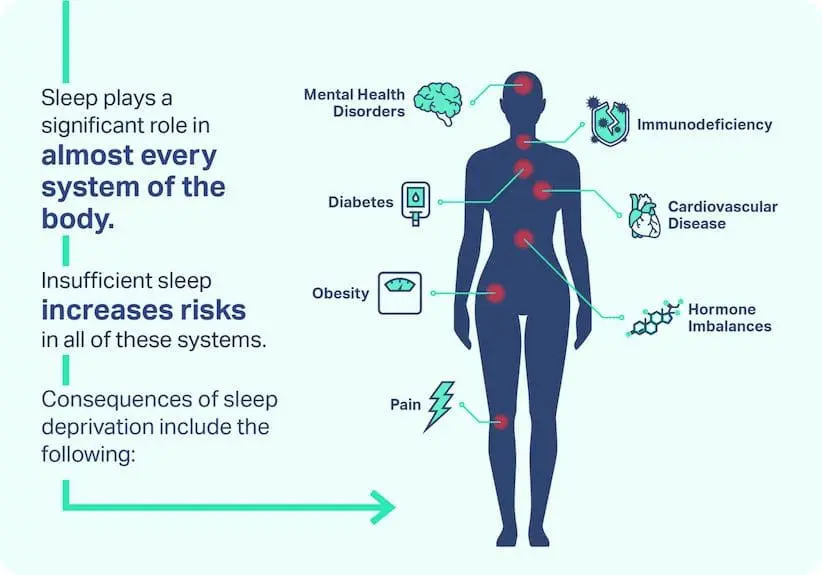
- Heart and circulatory systems: Sleep deprivation has long-term damaging effects on your heart and circulatory health. People with chronic sleep deprivation are more likely to develop high blood pressure (hypertension) and high cholesterol (hyperlipidemia).
- Metabolic systems: People with chronic sleep deprivation are at a much higher risk of developing Type 2 diabetes.
- Immune system: Your body’s natural defenses against infections can’t work properly if you aren’t getting enough sleep.
- Nervous system: It’s common for people who aren’t sleeping enough to have higher pain sensitivity, which means they feel pain more easily, the pain is more intense or both.
- Brain: Sleep deprivation can have significant negative effects on brain functions. It is a crucial aspect of learning, memory, and may even play a role in the development of Alzheimer’s disease.
- Mental health: Sleep deprivation also negatively affects your mental health, making it harder for you to manage and process your emotions. People with sleep deprivation are more likely to feel symptoms of depression and anxiety.
The effects of sleep deprivation depend on why it happens and how long it lasts. The longer a person has sleep deprivation, the greater — and more severe — the effects.
Conditions that can get worse or happen because of sleep deprivation
Sleep deprivation also increases your risk of developing certain conditions or making them worse if you have them. These conditions include:
- Type 2 diabetes.
- High blood pressure (hypertension).
- Obesity.
- Obstructive sleep apnea.
- Vascular disease.
- Stroke.
- Heart attack.
- Depression.
- Anxiety.
- Conditions that involve psychosis.
Symptoms and Causes
What are the symptoms of sleep deprivation?
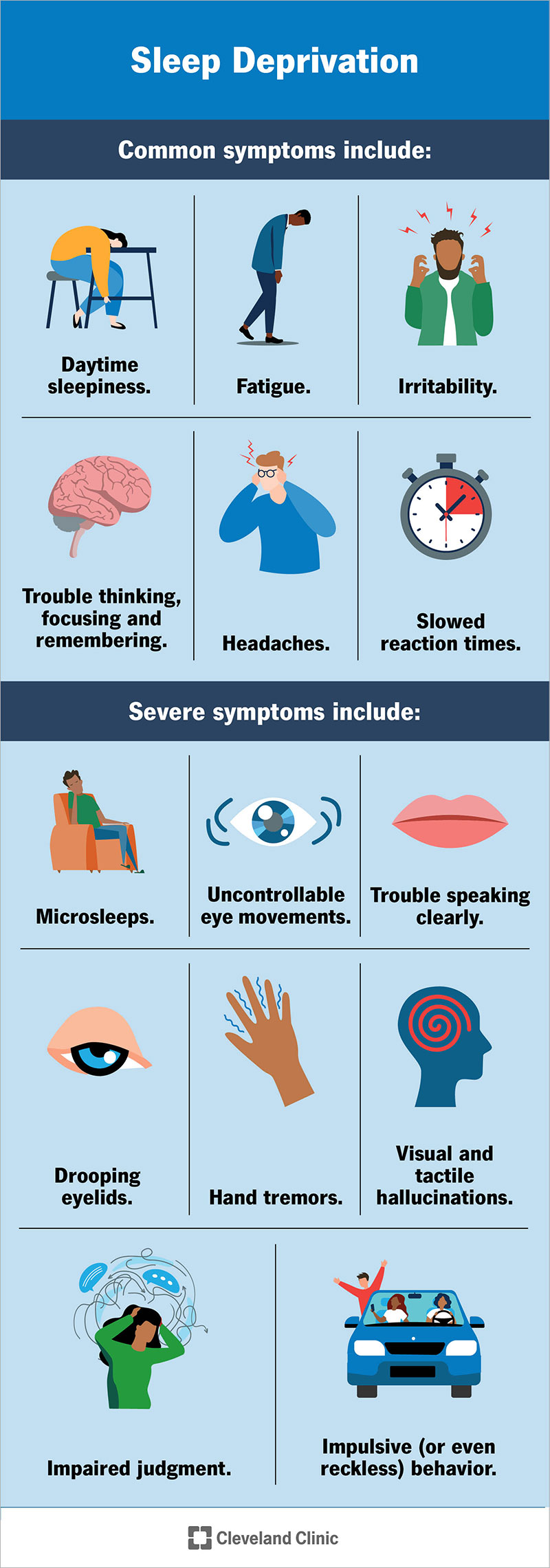
Sleep deprivation causes many symptoms. Some of the most common symptoms include:
- Daytime sleepiness.
- Fatigue.
- Irritability.
- Trouble thinking, focusing and remembering.
- Slowed reaction times.
- Headaches.
As sleep deprivation goes on for longer, the symptoms become more severe. Many of the more severe symptoms look like the effects of alcohol intoxication. The severe symptoms of sleep deprivation include:
- “Microsleeps” (when a person briefly falls asleep for only seconds before waking back up).
- Uncontrollable eye movements (nystagmus).
- Trouble speaking clearly.
- Drooping eyelids (ptosis).
- Hand tremors.
- Visual and tactile (touch-based) hallucinations.
- Impaired judgment.
- Impulsive (or even reckless) behavior.
Stages of sleep deprivation
Total sleep deprivation, which is when you aren’t getting any sleep, happens in stages. These stages are:
- Stage 1: This is when you go at least 24 hours without sleeping. In this stage, the effects of sleep deprivation are similar to being under the influence of alcohol to the point where it isn’t safe for you to drive.
- Stage 2: Common symptoms of sleep deprivation intensify. Most people start to experience microsleeps in this stage and have trouble thinking or focusing.
- Stage 3: People in this stage start to show very severe symptoms like hallucinations. They may also struggle to communicate with people around them.
- Stage 4: The symptoms of sleep deprivation are at their most extreme. The above symptoms worsen to severe or extreme levels. Hallucinations are common and you struggle to tell what’s real and what isn’t.
What causes sleep deprivation?
Sleep deprivation can happen for numerous reasons. Many of these have to do with the circumstances of your life.
- Shift work (especially shifts that happen partly or fully during nighttime hours).
- Alcohol use (especially misuse).
- Using stimulants like caffeine later in the day.
- Bad sleep-related habits (known as sleep hygiene).
- High stress levels.
- Sleeping in a new or unfamiliar place, such as in a hotel while traveling.
However, sleep deprivation can also happen for medical reasons. Some examples include:
- Lack of quality sleep due to sleep apnea.
- Degenerative brain disorders such as Alzheimer’s disease or Parkinson’s disease.
- Mental health concerns (see below for more about these).
- Concussions and traumatic brain injuries.
- Pain.
- Insomnia.
- Restless leg syndrome.
- Parasomnias (disruptive sleep disorders) such as night terrors, sleep paralysis, sleepwalking and more.
- Medications such as corticosteroids, stimulants and more.
- Short-term illnesses and infections, such as the common cold, the flu and more.
Mental health concerns
Your mental health has a major impact on your sleep and vice versa. This can set up a cycle that reinforces itself as it gets worse. An example of this would be depression that makes it harder to sleep, which causes sleep deprivation, which then makes you feel even more depressed.
Mental health issues that can affect sleep include, but aren’t limited to, the following:
- Anxiety.
- Bipolar disorder.
- Depression.
- Mania.
- Panic disorder.
- Post-traumatic stress disorder (PTSD).
- Somniphobia (fear of sleep).
Is it contagious?
Sleep deprivation isn’t contagious. You can’t catch it from or spread it to others.
Diagnosis and Tests
How is sleep deprivation diagnosed?
A healthcare provider can usually diagnose sleep deprivation simply by asking you questions about your symptoms, health history and your daily and nightly routines. However, there are a few conditions where further tests are needed to determine if a related condition is contributing to or happening because of sleep deprivation. Some possible tests include:
- Sleep apnea testing. This can happen in the form of an overnight sleep lab study called a polysomnogram or with an at-home sleep apnea testing device.
- Electroencephalogram (EEG). This test detects and records brain waves. Your healthcare provider, usually a neurologist, can examine your brain activity for signs of unusual brain activity that could contribute to sleep problems or other conditions.
- Actigraphy. This test involves wearing a device similar to a watch that tracks sleep patterns to see if you may have a different sleep cycle than is typical. This is key in diagnosing circadian rhythm disorders
- Multiple sleep latency test (MSLT). This test examines whether a person is prone to falling asleep during the daytime. It’s often a key part of diagnosing narcolepsy.
- Maintenance of wakefulness test (MWT). This test looks for whether or not a person can resist falling asleep in situations where it would be easy to do so. It’s a common part of safety testing for people who drive for a living and may have conditions like sleep apnea.
Other tests are also possible when sleep deprivation is something that your healthcare provider suspects. Your provider is the best person to tell you what tests they recommend and why they believe these tests are necessary.
Management and Treatment
How is it treated, and is there a cure?
Sleep deprivation can happen for many reasons, which means there’s no one way to cure it. Depending on why it happens, it’s often a treatable condition. However, treatment for sleep deprivation can take many different forms. Some treatment approaches focus on changing how a person sleeps (or prepares for sleep), while others focus on treating whatever disrupts a person’s ability to sleep.
Some of the more common treatments for sleep deprivation and related conditions include:
- Behavior changes. Many people can prevent sleep deprivation simply by adjusting their sleep-related behaviors and pre-sleep routine.
- Medications. Various medications can help a person fall and stay asleep or change the way they sleep. Some medications can even change the way a person dreams, making it less likely that they’ll have severe nightmares or other sleep disturbances. However, many sleep-inducing medications can be habit-forming, so healthcare providers prescribe these cautiously.
- Breathing support methods. Conditions that affect breathing during sleep, such as sleep apnea, are treatable with various methods. These include different types of pillows and supports, mouthpieces that adjust your jaw position, surgery to widen your airway, positive airway pressure machines that keep your airway open while you sleep and more.
Complications/side effects of the treatment
The possible complications and side effects vary depending on the treatment, the underlying cause of the sleep deprivation and other factors. Your healthcare provider is the best person to explain the complications or side effects that are possible or likely in your situation.
How to take care of myself or manage the symptoms?
Sleep deprivation is a common issue, and often a person can manage it on their own. However, if the symptoms continue even with attempts to manage them on your own, you should talk to a healthcare provider. This is especially true if you have symptoms of sleep apnea, which is when you stop breathing in your sleep. That condition can cause severe or even life-threatening problems when it goes untreated.

The best things you can do to help treat and prevent sleep deprivation include:
- Have a routine. Being consistent with sleep habits can make a big difference in how much and how well you sleep.
- Make the time for sleep. Set a bedtime that allows you to get the recommended amount of sleep for your age.
- Relax before bedtime.
- Maintain a good sleep environment.
- Limit the time you spend around bright lights or using electronics. Light from these too close to bedtime can disrupt your body’s natural sleep-wake functions.
- Avoid drinking alcohol or eating a meal too close to bedtime. A light snack is the best option if you feel hungry before bedtime.
- Exercise every day. Staying active, even just going for a walk, can help with the quality of your sleep.
- Don’t rely on sleeping medications. Long-term use of sleeping pills and other medications — even ones that are available over-the-counter — can negatively affect your sleep. The only sleep-related medications you should use regularly are ones your healthcare provider prescribes, and you should only take them as instructed.
- Only take daytime naps that are shorter than 30 minutes.
- Keep a sleep diary
How to get rid of your sleep debt
It may seem like getting extra sleep on the weekends would be the best way to get rid of sleep debt, but this is not the case. Sleeping in for an hour or two is fine, but sleeping in too late can disrupt your circadian rhythm, throw off your natural sleep schedule, and make it difficult to fall asleep when it’s time for bed.
Get rid of sleep debt the same way that you get rid of monetary debt: little by little. Stop accumulating sleep debt and make a plan to get rid of it.
Focus on getting good quality sleep and stick to a sleep schedule that provides enough sleep each night. Start going to bed earlier rather than waking up later. Going to bed 15 to 30 minutes earlier each night can make a big difference; gradually go to bed 15 minutes earlier until you are at your desired bedtime. Avoid napping during the day. The occasional nap is fine — especially if you need the sleep — but try to keep naps infrequent and brief (less than 30 minutes).
How soon after treatment will I feel better?
The time it takes to recover from sleep deprivation depends on several factors, including how severe it is and how long it lasts. Most people can recover from sleep deprivation with only a few — or even just one — nights where they get enough quality sleep. However, some people may need several nights of quality sleep to recover from long-term sleep deprivation.
Prevention
How can I reduce my risk of developing sleep deprivation or prevent it entirely?
It’s possible to reduce the risk of developing sleep deprivation, but it’s virtually impossible to prevent it entirely. Because it can happen for so many reasons, many of which are normal and expected at some point in your life, everyone has some amount of sleep deprivation at some point.
To reduce the risk of having sleep deprivation, following the above recommendations on sleep hygiene, and ensuring you have enough time for an adequate amount of sleep can make a big difference. However, some causes of sleep deprivation are impossible to prevent or avoid, especially when it happens because of a medical condition.
In those instances, the best thing you can do is see your healthcare provider sooner rather than later. Your doctor may refer you to a sleep specialist to determine if you have a sleep disorder. Early diagnosis and treatment, if necessary, can help minimize this issue’s effects and prevent it from causing more serious problems.
A note from Cleveland Clinic
Sleep deprivation is a condition that might seem minor, but it can have major negative effects on your activities and quality of life. It can also contribute to many other health conditions, some of which are dangerous over time.
If you have sleep deprivation, it’s important not to dismiss or ignore it. You can take many steps to improve your sleep, and if those aren’t successful, you should see your healthcare provider. They can determine whether or not you have sleep deprivation, how severe the issue is and why it’s happening, and then offer treatment recommendations. With timely diagnosis and treatment, getting the sleep you need is possible.






Leave a Reply