

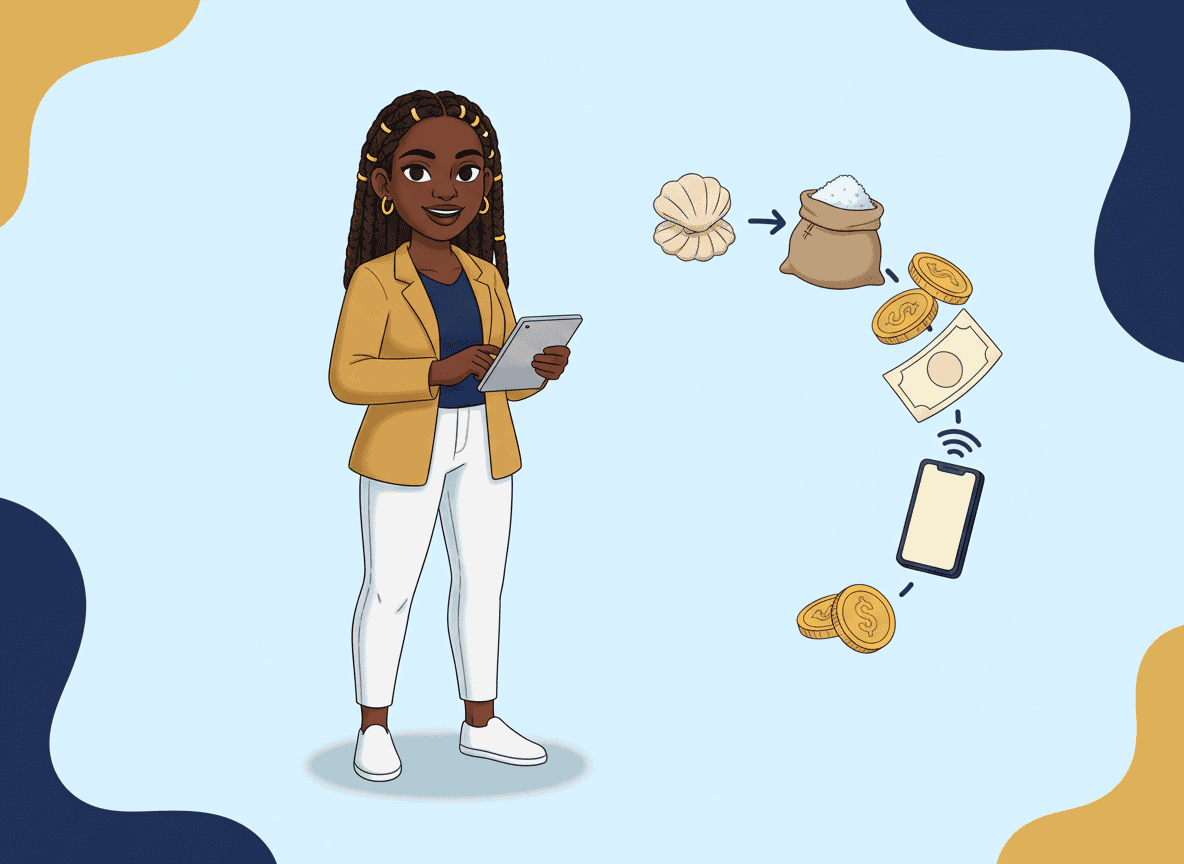
You use money every day, but have you ever stopped to ask what it actually is? This is the first lesson of Mondosol’s Make Money course. Your host is Amara, our money coach who lives by one rule: “Put it in the spreadsheet.”
Read the article, watch the videos, or press play and listen while you walk. On the platform, the interactive lesson lets you practise what you learn here.
In this article
Money is a shared agreement
A banknote is a piece of paper or polymer. It costs very little to print. Yet a shop will give you food for it.
Why? Because everyone agrees it has value, and because a government and its central bank stand behind it. Money works only as long as people trust it.
Before money: the barter problem
Imagine you keep chickens and need bread. With barter, you swap eggs for bread directly.
But what if the baker doesn’t want eggs? You would need to find someone who wants eggs and has what the baker wants. Economists call this the “double coincidence of wants”. Money solves it: everyone accepts it, so it becomes the go-between.

The three jobs of money
Economists agree that money does three jobs. Amara calls them the three columns of her spreadsheet:
- Medium of exchange. You use it to buy and sell things without bartering.
- Store of value. You can keep it today and spend it later. (Inflation slowly reduces what it buys, which is why saving and investing matter.)
- Unit of account. It gives everything a price, so you can compare a bike with a phone.
How money evolved
- Commodity money: useful or rare objects such as shells, salt, grain or cattle.
- Metal coins: easy to carry and count. Some of the earliest known coins come from Lydia, in today’s Turkey.
- Paper money: first widely used in China, later everywhere.
- Digital money: today most money is numbers in bank systems. When you tap a card or phone, you move those numbers.
In Norway, for example, cash is now used for only a small share of payments. Cards and apps like Vipps do most of the work.
Watch: the history of money
Video: “The History of Money” by OpenLearn from The Open University, on YouTube.
Video: “The History of Paper Money” by Extra History, on YouTube.
Try it: Amara’s value challenge
Pick any object near you: a mug, a pen, your phone. Ask two questions:
- How much is this worth to me?
- How much would someone else pay for it?
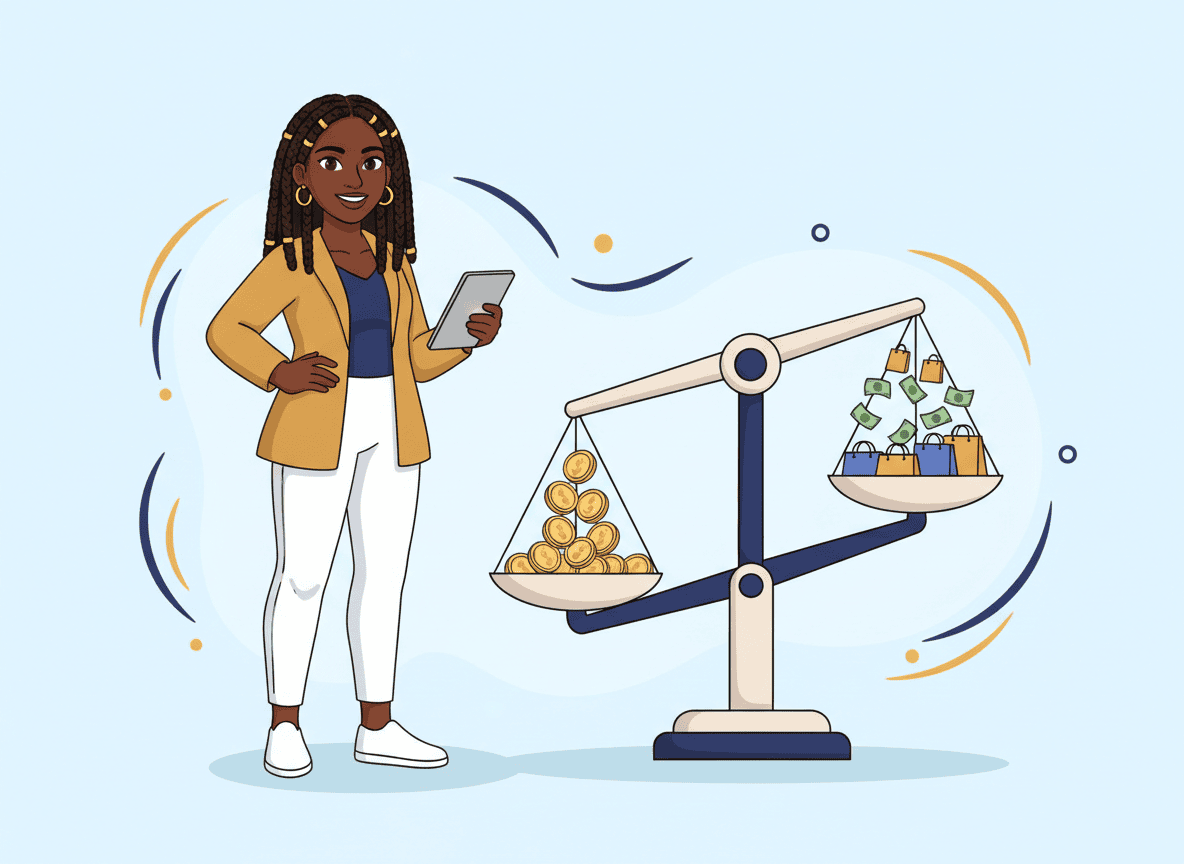
The gap between the two answers is where every buying, selling and saving decision starts.
FAQ
What is money in simple words?
Money is anything people widely accept in exchange for goods and services. Today that means coins, notes and, above all, digital balances in bank accounts.
What are the three functions of money?
Medium of exchange, store of value and unit of account.
Why does a banknote have value if it’s just paper?
Because people trust that others will accept it, and because it is issued and managed by a central bank. The value comes from trust, not from the material.
Is digital money “real” money?
Yes. The money in your bank account is a real claim on your bank, and in most European countries deposits are protected up to a legal limit by a deposit guarantee scheme.
Keep learning
- Practise it: open the interactive Make Money lessons in your learning journey.
- Next lesson: Earning vs. Spending: understanding the flow of money.
- Related: Banks and Accounts: how banks work.
This article is educational and is not financial advice. Amara is a fictional character from the Mondosol cast.





Leave a Reply