

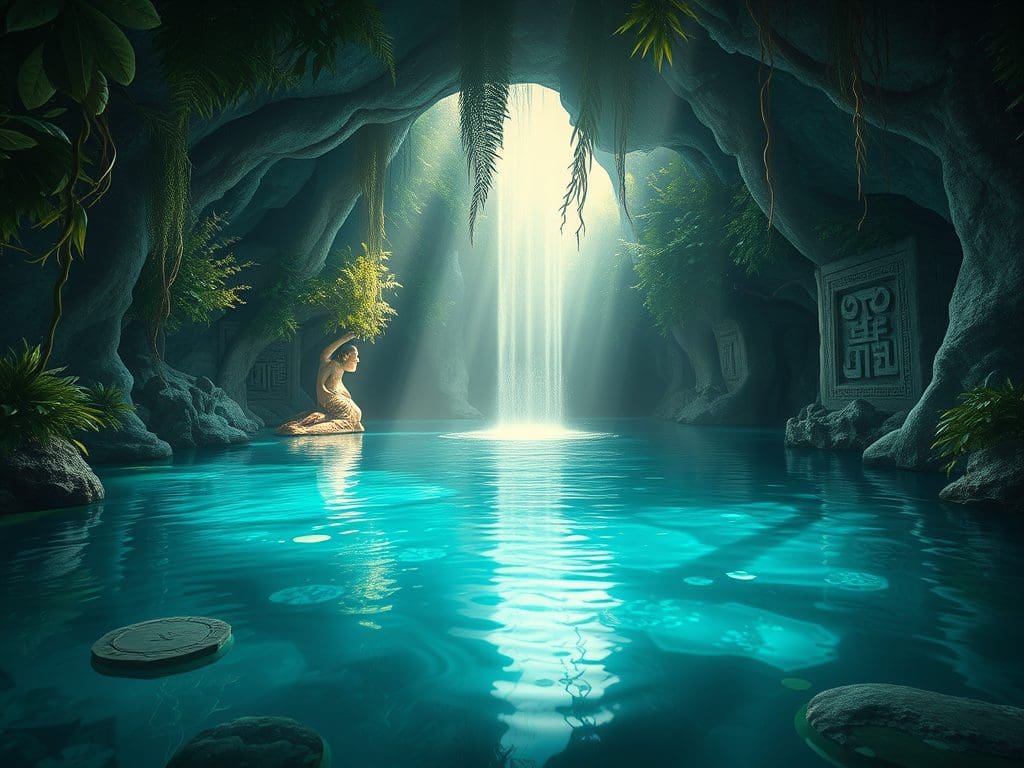
The ancient Maya civilization continues to captivate our imagination with its rich spiritual beliefs and mysterious archaeological sites. The Mayan underworld, known as Xibalba (pronounced “Shee-bal-ba”), is at the heart of their cosmology.

The sacred underworld played a crucial role in Mayan spirituality and culture. 🌌✨
Understanding Xibalba: The Place of Fright 😱
Xibalba translates to “Place of Fright” in the K’iche Maya language. It was believed to be the realm of death and a place for spiritual transformation. For the Yucatec Maya, this underworld was known as Metnal. It represented a journey where souls faced judgment from the Lords of the Underworld.
The Lords of the Underworld 👑
The Maya believed that Xibalba was ruled by powerful deities, including:
- 1 Death and 7 Death (the principal lords)
- Pus Master
- Bone Sceptre
- Skull Sceptre
- Jaundice Master
- Blood Gatherer
- Bloody Claws
“Xibalba was not just a place of fear; it was a transformative journey where souls learned valuable lessons.” – Dr. Elena Maya, Expert in Mesoamerican Studies. 📚
Key Takeaway: Understanding the roles of these lords provides insight into the complex spiritual framework of the Maya. 💫
Sacred Portals: Cenotes and Cave Systems 🌊
Throughout the Yucatan Peninsula, natural sinkholes known as cenotes served as sacred portals to Xibalba. These crystal-clear freshwater pools were more than just water sources; they represented direct connections to the supernatural realm. The Maya performed elaborate rituals and ceremonies at these sites, believing they could communicate with their ancestors and deities.
Archaeological Significance 🔍
Recent archaeological discoveries have revealed:
- Intricate cave systems with ancient artifacts
- Ceremonial offerings in cenotes
- Human remains from ritual sacrifices
- Religious artifacts and pottery
Key Takeaway: Cenotes are not just natural wonders but vital archaeological sites that help us understand Mayan rituals. 🌿
The Journey Through Xibalba 🚶♂️🌌
According to Mayan mythology, souls entering Xibalba faced various challenges and tests. The journey was seen not as an ending but as a transformation, where worthy souls will triumph over death itself. This belief system influenced the design of many temples and pyramids, which represented the layers of the underworld.
Concluding Statement: Xibalba embodies a journey of transformation, reflecting the Mayan understanding of the afterlife.
Modern Understanding & Preservation Efforts 🌎💪
Today, archaeologists and researchers continue to uncover new insights about Xibalba and its significance in Mayan culture. Approximately 80% of Mayan ruins stay hidden underground or covered by dense jungle, suggesting many more discoveries await.
Visiting Sacred Sites 🗺️
When exploring cenotes and archaeological sites linked to Xibalba, visitors should:
- Show respect for these sacred spaces
- Follow local guidelines and regulations
- Learn about the cultural significance
- Support conservation efforts
“Protecting our ancient sites is crucial for preserving future generations’ ability to learn from them.” – Prof. Carlos Jungle, Archaeologist and Author. 🌿
Key Takeaway: Respect and preservation are vital for sustaining the cultural legacy of the Maya.
Cultural Legacy of the Maya: Xibalba’s Influence 🎨
The concept of Xibalba continues to influence modern understanding of Mayan spirituality. It has inspired countless works of art, literature, and academic studies. It signifies the sophisticated religious beliefs of one of history’s most fascinating civilizations.
Exploring Xbulu-Ha: The Gateway to the Underworld 🌊💫
Xbulu-Ha, which translates to “Place of Fear” or “Fearful Swamp” in the Mayan language, holds great religious and mythological importance. As the entrance to Xibalba, it served as a realm for the gods of death, spirits, and demons.
The Mayans viewed death as a transformative process rather than an ending. According to mythology, souls would journey through Xbulu-Ha. They would then descend into Xibalba. Their destiny would be determined by the gods there.
Key Takeaway: Xbulu-Ha serves as an essential cultural symbol that informs the Mayan perspective on death.
Venturing into Xbulu-Ha: A Journey of Discovery 🔍🚪
Exploring Xbulu-Ha is a surreal experience. It is characterized by a network of underground caves, cenotes, and natural sinkholes. The Mayans considered all of these places sacred. Archaeological discoveries of intricate cave systems and artifacts offer valuable insights into their traditions.
Legends of Xbulu-Ha: 📜
- The Myth of Xtabay: A treacherous spirit that lures men into darkness.
- The Hidden Doorway: An uncharted entrance to an alternate realm where time stands still.
Key Takeaway: The mystical elements of Xbulu-Ha reveal the Mayans’ complex relationship with life and death.
Preserving Xbulu-Ha: A Collective Responsibility 🌱🌍
As with many ancient sites, Xbulu-Ha faces the challenges of preservation and conservation. Respecting this sacred place is crucial. Protecting it ensures future generations can explore and understand the profound beliefs of ancient Mayan civilization.
Final Thoughts:
Xbulu-Ha invites us to delve into the depths of Mayan cosmology. It helps connect us with the spirituality and legacy of one of history’s most intriguing civilizations.

Share Your Thoughts:
Have you visited Xbulu-Ha or any other ancient Mayan sites? Share your experiences on social media using #MayanMysteries! 💬✨
People Also Read 📖
- Cancun: The Caribbean’s Perfect Mix of Relaxation and Adventure
- Vibrant Traditions and Thrills in Huacachina, Peru
- International Cat Day: A Global Celebration of Feline Love
- Harv Eker Academy Wealth Creation Program: Millionaire Mindset
Further Reading: If you’re interested in diving deeper into Mayan spirituality, consider reading academic sources from institutions. Look for resources from the Maya Research Program. You can also explore works by renowned authors in Mesoamerican studies. 📚
What insights have you gained about Xibalba and Xbulu-Ha?
Join the conversation in the comments below!




Leave a Reply