


Read time: 30 seconds | Policy isn’t just paperwork—it’s the blueprint for how societies function, how people access opportunities, and how futures are built. Academic leaders are the architects behind these blueprints, transforming research into real-world change.

Why Academic Leadership Matters in Policymaking 💡
Academic leaders do more than publish papers or run universities. They:
✅ Influence public discourse and challenge outdated systems
✅ Advise governments with evidence-based frameworks
✅ Bridge the gap between research and practical decision-making
✅ Shape ideas that ripple outward into collective well-being
In a world facing inequality, technological disruption, and complex social challenges, policy needs more than political expediency—it needs knowledge, vision, and accountability.

Higher Education: The Foundation of Policy Influence 📚
Advanced study, particularly a doctorate in education, creates leaders who can:
- Evaluate existing systems with critical thinking
- Identify weaknesses and propose evidence-based reforms
- Understand the interconnectedness of social issues
- Frame change in ways that resonate with diverse stakeholders
The result? Academic leaders don’t just advocate for change—they make it actionable and sustainable.

Bridging Research and Real-World Implementation 🌉
The Problem: Valuable research often stays trapped in journals and conferences.
The Solution: Academic leadership translates complex findings into language that policymakers, practitioners, and the public can understand and act upon.
This isn’t about oversimplifying down research—it’s about making knowledge actionable. Academic leaders interpret data, frame solutions, and ensure insights reach the people who can implement them.

The Ethical Responsibility of Academic Leaders ⚖️
With great influence comes great responsibility. When scholars engage with policy, they affect lives far beyond campus walls.
Ethical academic leadership means:
🔹 Acting with integrity, transparency, and fairness
🔹 Amplifying marginalized voices often excluded from mainstream discourse
🔹 Ensuring inclusivity becomes central to policy design
🔹 Preventing policies that perpetuate injustice, no matter how technically sound
Academic leaders serve as guardians of ethical standards in public life.

Academic Leadership in Times of Crisis 🚨
History shows that crises accelerate the demand for sound leadership. Whether facing:
- Economic downturns
- Global pandemics
- Rapid technological disruption
Policymakers turn to academic leaders for clarity and guidance.
What academic leaders bring to crisis management:
✔️ Analytical skills to interpret uncertainty
✔️ Historical and social context to avoid tunnel vision
✔️ Long-term perspective to balance immediate needs with sustainable solutions
✔️ Frameworks for resilience that endure beyond the crisis

The Power of Academic Networks 🤝
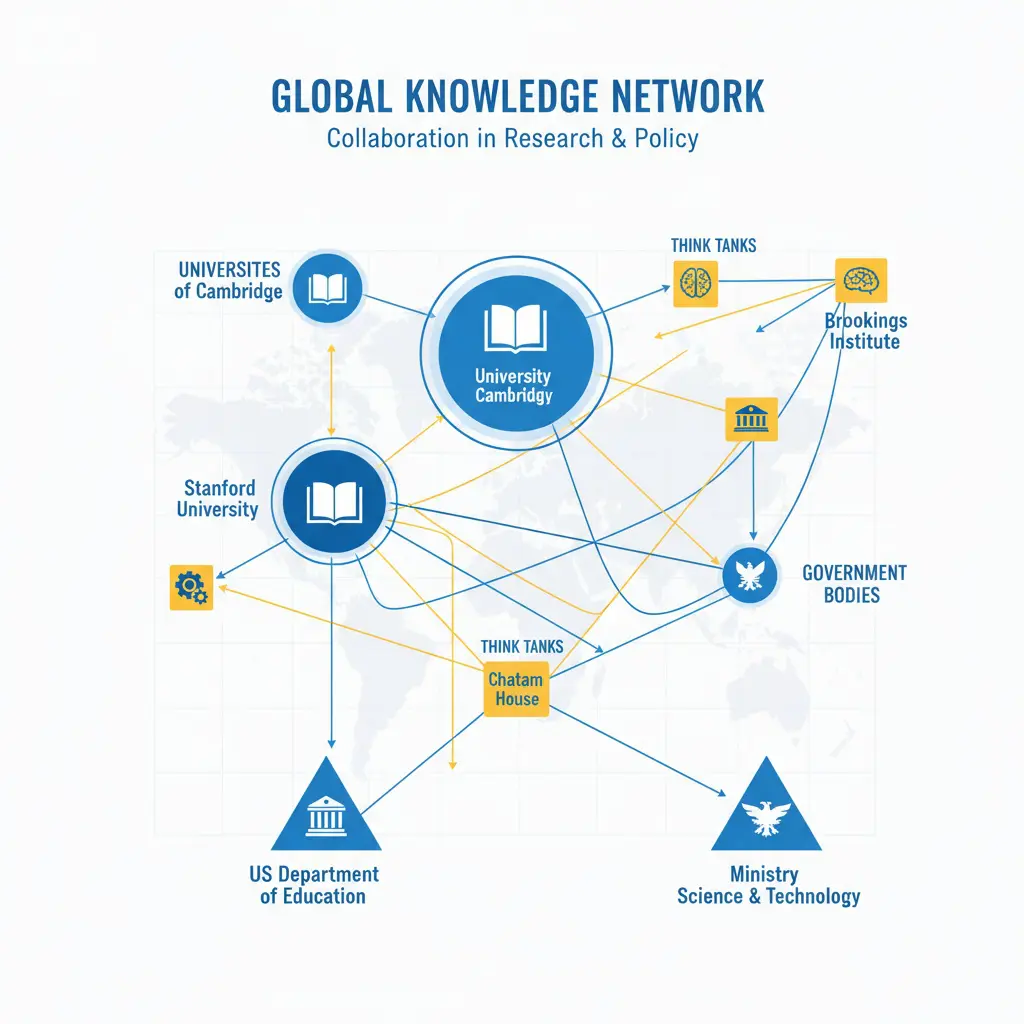
Individual academic leaders are powerful, but networks amplify that power exponentially.
Through think tanks, research institutes, and advisory councils, academic networks:
- Ensure policymaking is guided by diverse, well-informed perspectives
- Check bias and prevent narrow interests from dominating
- Foster dialogue across disciplines
- Cultivate holistic, representative recommendations
Bottom line: Collective academic expertise creates stronger, more balanced policy.
Engaging the Public Sphere 📢
Policy influence isn’t limited to closed-door meetings. Academic leaders shape how citizens understand pressing issues through:
- Public lectures and media engagement
- Community outreach and education
- Translating policy debates into accessible narratives
Why this matters:
🔸 Fosters an informed citizenry vital for democratic governance
🔸 Builds trust between institutions and the people they serve
🔸 Ensures even the most carefully crafted reforms gain public acceptance
Trust is the currency of effective policy—without it, reforms fail.

Challenges Academic Leaders Face ⚠️
Despite their influence, academic leaders encounter significant obstacles:
Political resistance – Competing interests limit academic insight
Bureaucratic inertia – Slow systems clash with urgent timelines
Partisan pressures – Risk of academic voices being co-opted
Credibility threats – Maintaining independence while engaging politically
Overcoming these challenges requires:
- Resilience and diplomacy
- Steadfast commitment to academic integrity
- Strategic communication skills
- Patience with complex systems

The Future: Knowledge-Driven Policy 🔮
As societies grapple with global challenges—climate change, technological disruption, demographic shifts—the need for informed, visionary leadership grows more urgent.
Academic leaders stand at the intersection of knowledge and action, offering:
🌟 Insights and frameworks to chart a path forward
🌟 Conditions in which sound policy can emerge
🌟 Wisdom-driven decision-making over political expediency
🌟 Justice, inclusivity, and progress as core values
Their influence isn’t about dictating policy—it’s about shaping the intellectual and ethical foundation from which good policy emerges.

Key Takeaways 📌
✨ Academic leadership transforms research into actionable policy
✨ Higher education provides the tools to navigate complex policymaking
✨ Ethical responsibility and inclusivity are non-negotiable
✨ Networks amplify individual expertise into collective power
✨ Public engagement builds trust and informed citizenship
✨ Despite challenges, academic leaders remain essential to society’s future
Next Steps: How to Apply Academic Leadership 🚀
Aspiring academic leaders:
- Pursue advanced education that deepens critical thinking
- Engage with policymakers and practitioners early
- Build networks across disciplines and sectors
- Commit to ethical standards and inclusive practices
- Translate your research for public consumption
Policymakers:
- Seek academic partnerships for evidence-based frameworks
- Create channels for ongoing academic input
- Value long-term perspective alongside immediate needs
Citizens:
- Support academic institutions and research funding
- Engage with academic leaders in public forums
- Demand evidence-based policy from elected officials

Final Thought 💭
Policies are more than documents—they’re reflections of values, visions, and the intellectual currents of their time. Academic leaders ensure directions that advance justice, inclusivity, and progress.
The quiet yet profound force of academic leadership shapes society’s future, one policy at a time.
Want to learn more about educational leadership and policy influence? Contact us to explore coaching programs, courses, and resources that can help you make a real-world impact.
Share this article if you believe in the power of knowledge-driven policy! 👇






Leave a Reply