


Ever wonder why some kids light up when you mention group projects while others look like you just asked them to walk barefoot across hot coals? Understanding student motivation in 2025 could provide some answers.

Here’s the truth: student motivation isn’t one-size-fits-all anymore—and in 2025, it’s more unpredictable than ever.
The old playbook? Gold stars, pizza parties, and “good job!” stickers? They’ve lost their magic. Today’s learners are growing up in a world that’s constantly shifting—AI tools in every classroom, climate anxiety on every news feed, and more screen time than sleep. They want education that means something. That feels relevant. That matches their world and their needs.
And yet? Most education systems are still pushing motivation through outdated checklists: finish the worksheet, pass the test, get the grade.
But what if those aren’t the goals students care about anymore?
In this post, we’re diving into what truly drives learners today, how their needs have shifted, and what educators can do to keep motivation alive in a world where attention spans are short and expectations are sky-high.
Motivation Is Personal Now 💡
Back when everyone sat in neat rows and learned from the same textbook, motivation was simple: do well, get praised. That model? It doesn’t work anymore. Not because students are lazy—but because their lives (and their minds) are way more complex.
Kids in 2025 are growing up with endless content at their fingertips. They watch people their age start businesses on TikTok. Also they hear about social justice issues at lunch. They can ask ChatGPT anything and get an answer faster than their teacher can find a chalkboard marker.
The result? They crave connection and meaning, not just information.
This shift has pushed schools to rethink their approach. The best ones are leaning into student focused teaching, where learning begins with the student’s interests, strengths, and needs. This approach gives learners more control and makes education feel personal instead of prescribed.
It’s not about handing over the curriculum. It’s about creating space for curiosity. When a student asks, “Why does this matter?” the goal isn’t to shut them down. It’s to give them a reason to care.
Real motivation comes from seeing how the material fits into their life, not just the classroom.
Relevance Beats Rigor 🎯
There’s still a place for challenge. Students need to stretch their thinking. But what they want even more? For learning to feel like it matters.
In the past, the promise of a better job or a college acceptance letter was enough. Now, with job markets shifting and college costs soaring, that promise feels shaky. Today’s learners want skills they can use tomorrow, not in some vague future.

For example: A high schooler might be more excited about learning to build a website than diagramming sentences. Not because they hate grammar—but because one feels useful and the other doesn’t. The same goes for topics like financial literacy, mental health education, and climate science. These subjects speak to their reality.
Teachers who find ways to connect lessons to current events or real-world scenarios see higher engagement. It’s the difference between solving equations and figuring out how much interest you’ll owe on a student loan. Same math. Different meaning.
Voice and Choice Matter 🗣️
Motivation increases when students feel like they have a say. Whether it’s choosing a book to read, a project to pursue, or how to present their findings, autonomy drives effort.
That doesn’t mean a free-for-all. Boundaries and expectations still exist. But giving students a voice helps them feel respected. And when students feel respected, they show up differently.
Let’s say a teacher offers three options for a final project: a written report, a video presentation, or a creative art piece. That small amount of choice can change everything. A student who hates writing may put double the effort into a visual piece because they finally feel seen.
This principle isn’t new, but it’s more important now. Kids are used to customizing everything—from playlists to avatars to settings on their devices. Education should offer a bit of that flexibility too.
Mental Health Can’t Be Ignored 🧠
Let’s not pretend students show up with a clean slate every day. They carry anxiety, fear, pressure, and distraction with them—sometimes in silence. And that takes a toll on their motivation.
Post-pandemic studies show a rise in teen depression and burnout. Social media isn’t helping. The pace of life is overwhelming. When a student zones out in class, it might not be boredom. It might be overload.

Schools that recognize this are making mental health part of the conversation. They’re teaching self-regulation, building quiet zones, and rethinking discipline. They’re training teachers to spot the difference between apathy and emotional exhaustion.
Student motivation can’t exist in a vacuum. If students don’t feel safe or supported, they won’t be able to engage. They won’t have the energy to care.
Digital Tools Are Not the Enemy 💻
There’s a debate about tech in the classroom. Some see it as a distraction. Others see it as the future. The truth is somewhere in the middle.

Yes, screens can pull focus. But when used intentionally, digital tools unlock creativity and access. A student who struggles to write might thrive using voice-to-text. Another might use an app to learn at their own pace. Virtual labs. Interactive history timelines. Even AI writing tools. They all have a place if guided by purpose, not gimmick.
The key is not using tech for tech’s sake. It’s using it to support goals that already matter. If a tool helps a student express themselves, build skills, or stay engaged, it’s worth exploring.
Learning Should Spark Curiosity, Not Just Compliance 🔥
At its core, student motivation is about wanting to know more. Not because you have to. Because you want to.
Curiosity is a powerful fuel. But school systems often bury it under rules, rubrics, and rigid timelines. The challenge for educators is to leave space for wonder.
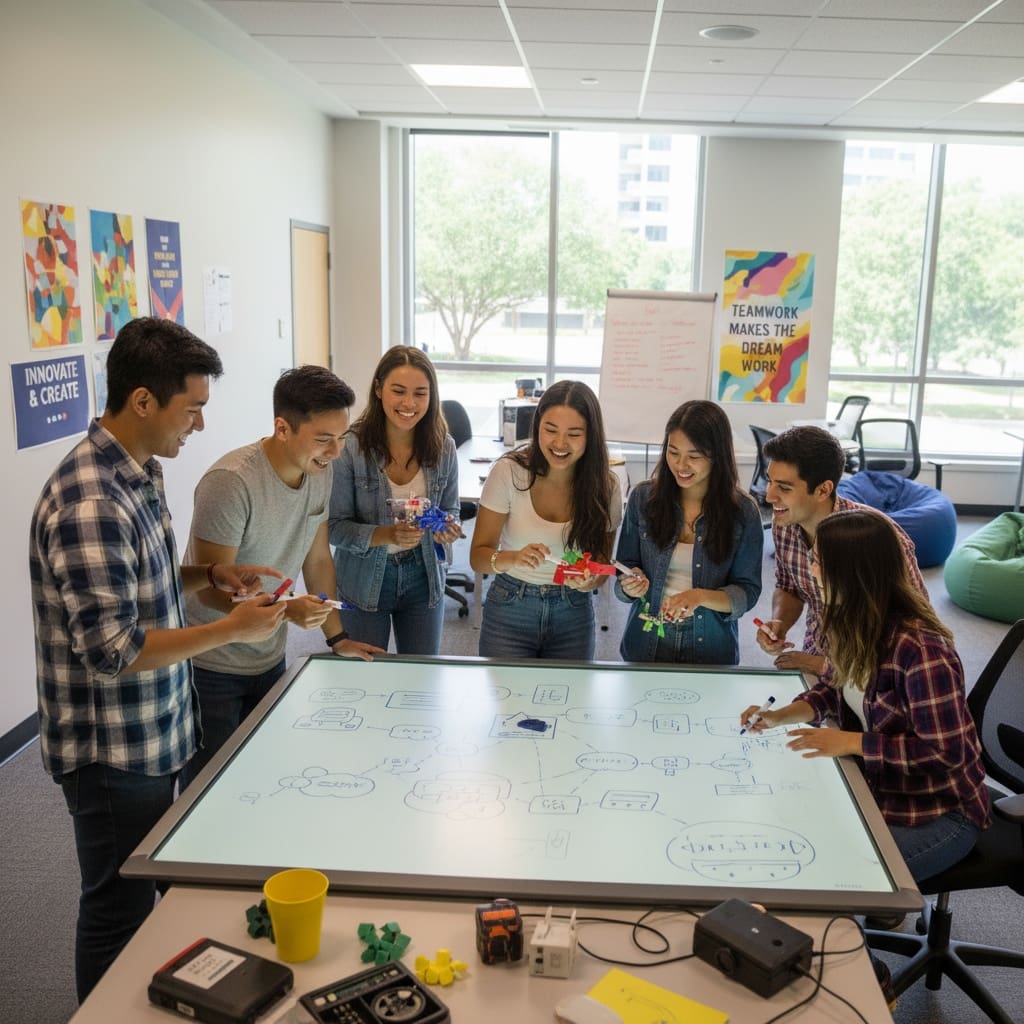
That might mean letting students go off-topic occasionally. Or saying, “I don’t know. Let’s find out.” Or creating assignments that invite exploration, not just repetition.
When students feel like they’re part of something exciting, they lean in. When they feel like they’re ticking boxes, they check out.
What the Future Demands of Education 🚀
The world our students are entering is unpredictable. It rewards problem-solving, adaptability, empathy, and creativity. If motivation in the classroom doesn’t reflect that, we’re not preparing them for reality.
What motivates learners in 2025 and beyond isn’t about scores or grades. It’s about relevance, relationships, and the chance to do something that matters.
If we want students to care about learning, we have to care about them. Their lives, ideas and goals. That’s where real motivation lives. And that’s where the future of education begins.
FAQ: Student Motivation in 2025 ❓
Why don’t traditional rewards work anymore?
Students today are exposed to endless content and experiences. Simple rewards like stickers or grades don’t connect to their complex, fast-paced lives. They need meaning, relevance, and personal connection.
What is student-focused teaching?
It’s an approach where learning starts with the student’s interests, strengths, and needs. Instead of a one-size-fits-all curriculum, teachers create space for curiosity and personalize the learning experience.
How can teachers make lessons more relevant?
Connect lessons to real-world scenarios, current events, and skills students can use immediately—like financial literacy, coding, or mental health awareness.
Why is mental health important for motivation?
Students carry stress, anxiety, and burnout that affect their ability to engage. Supporting mental health creates a safe environment where students have the energy and focus to learn.
Are digital tools helpful or distracting?
Both. When used intentionally, digital tools can enhance creativity, accessibility, and engagement. The key is using them purposefully, not just for novelty.
Ready to rethink how we motivate the next generation? Let’s start by listening to what students actually need—not what we think they should want. 🌟






Leave a Reply