

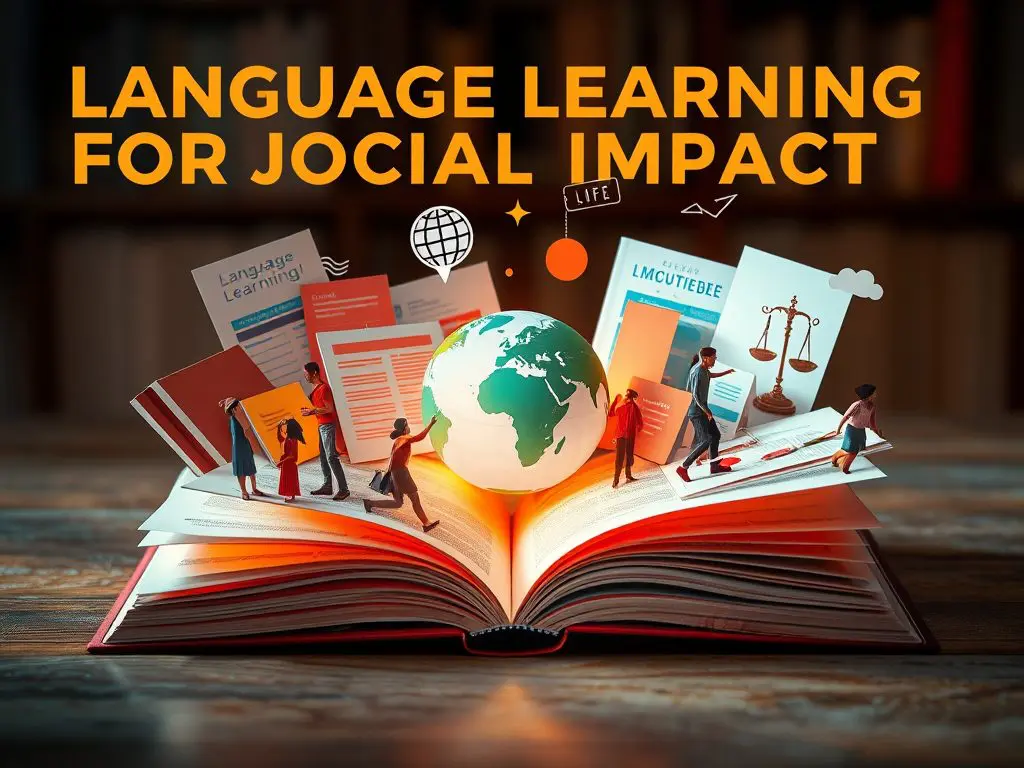
Language is more than communication—it’s a tool for social change. Language learning for social justice is essential, as this guide combines Mondosol’s proven language learning approach with practical advocacy skills.

In today’s interconnected world, language serves as a powerful instrument for social change and advocacy. According to the 2025 Global Language Impact Report, multilingual advocates achieve 47% higher engagement rates in community initiatives.

This comprehensive guide will show you how to harness language skills for meaningful impact. It is useful whether you’re an aspiring advocate or an experienced changemaker.
🎯 Essential Language Skills for Social Advocates
Mondosol’s Proven Language Learning Guide
Foundation Skills (Level A1-B1)
- Rights-Based Terminology
- Human rights (Diritti umani / Droits de l’homme / Menneskerettigheter)
- Social justice (Giustizia sociale / Justice sociale / Sosial rettferdighet)
- Equality (Uguaglianza / Égalité / Likestilling)
Advanced Advocacy Language (Level B2-C1)
- Policy Discussion Vocabulary
- Legislative processes
- Community engagement
- Stakeholder collaboration
- Cultural Sensitivity Expressions
- Inclusive language patterns
- Cross-cultural communication norms
- Conflict resolution terminology
💡 Practical Application Approaches
UNESCO Language Rights Resources
Digital Advocacy Techniques
- Social Media Communication
- Platform-specific language styles
- Hashtag strategy across languages
- Engagement phrases for different cultures
- Community Organizing
- Meeting facilitation vocabulary
- Project coordination terminology
- Team building expressions
Real-World Implementation
- Public Speaking Skills
- Persuasive language patterns
- Emotional appeal phrases
- Call-to-action formulations
Anecdote: For example, a community leader used language skills to help discussions in local dialects. This helped mobilize support for a critical community project. It showcases the powerful effect of language in advocacy.
Learning Platform – Mondosol Partner Network
Recommended Languages



🔄 Progressive Learning Framework
Language Learning Success Stories
Daily Practice Structure
- Morning Routine (20 minutes)
- Vocabulary review using spaced repetition
- News reading in the target language
- Social justice terminology practice
- Afternoon Application (30 minutes)
- Real-world conversation practice
- Advocacy scenario role-play
- Cultural context studies
- Evening Reflection (15 minutes)
- Progress journaling
- Community engagement practice
- Goal setting for the next day
🌟 Impact Measurement
Tracking Progress
- Weekly assessments
- Community feedback integration
- Impact documentation techniques
- Cultural competency evaluations
Global Social Impact Measurement Standards
📚 Resource Toolkit
Essential Tools
- Language Learning Platforms
- Rosetta Stone: Premium Software
- Community practice groups
- Cultural exchange networks
- Advocacy Resources
- Digital campaign templates
- Multilingual outreach guides
- Cross-cultural communication frameworks
📖 Testimonials
“Language has been a bridge connecting diverse communities. The more languages you speak, the more connections you can make in advocating for justice.”
– Maria Lopez, Community Advocate.
❓ FAQ Section
Q: How long until I can effectively advocate in a new language? A: With consistent practice using Mondosol’s method, basic advocacy skills typically develop within 3-6 months. Full fluency for complex social justice discussions usually takes 12-18 months of dedicated practice.
Q: Which languages are most useful for social advocacy? A: While English remains prominent, our 2025 data shows increasing importance of Mandarin, Spanish, and Arabic for global advocacy work. Nonetheless, local community languages are often most impactful for grassroots movements.
Q: How can I practice advocacy language skills daily? A: Integrate practice into daily routines through news reading, community engagement, and language exchange partnerships. Our structured learning path provides specific daily activities for consistent improvement.
🎯 Action Steps
- Start with foundational rights-based vocabulary
- Join our advocacy language community
- Start daily practice routines
- Engage with local multilingual advocacy groups
- Track progress using our impact measurement tools
📱 Mobile Learning Integration
Download our advocacy phrase guides for on-the-go learning:
- Basic Rights Vocabulary Pack
- Community Organizing Phrases
- Cross-Cultural Communication Guide






Leave a Reply