

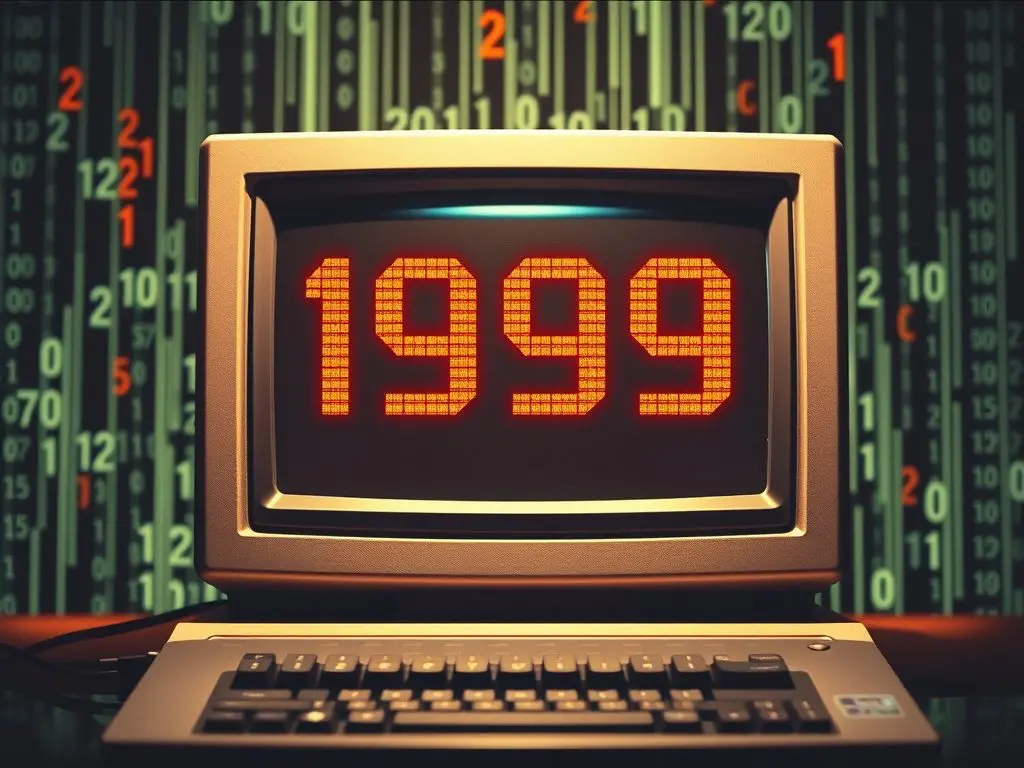
Discover the fascinating story of the Y2K bug, its global impact on technology, and how it shaped modern computing. The Y2K bug, also known as the Year 2000 bug, is a crucial case study. It highlights the importance of preparedness in the face of technological challenges.

When the World Feared a Digital Apocalypse 💻 (2025 Historical Look)”
A significant statistic to consider is that approximately 90% of U.S. corporations had to change their systems for Y2K compliance. Learn why this millennium scare still matters today.
🔍 What Was the Y2K Bug?
The Y2K bug (Year 2000 bug) wasn’t just another technical glitch. It was a potential digital disaster. The whole world held its breath! As the year 2000 approached, many individuals and businesses were filled with uncertainty.

Imagine this: computers worldwide were programmed to read years using only two digits (like ’99’ for 1999). When 2000 approached, many feared these systems would interpret ’00’ as 1900, causing global chaos. The Y2K bug highlighted why being technologically prepared is crucial for our reliance on digital systems.
🌍 Global Impact and Preparations
The Y2K bug posed significant risks across various sectors, including:
- Banking systems at risk of failure
- Air traffic control concerns
- Power grid vulnerability
- Healthcare system threats
- Financial market uncertainties
Inaction would have led to widespread bank failures. It would have also caused unsafe air travel and loss of power. These scenarios would greatly disrupt daily life. In preparation, banks, governments, and organizations around the world implemented measures to mitigate risks linked to the Y2K bug.

NASA undertook a massive overhaul of its software systems. This was to guarantee compliance. Major financial institutions, like Bank of America, invested millions in new code and testing.
💡 The Tech World’s Response to the Y2K Bug
Companies and governments worldwide invested an estimated $300 billion to prevent potential disasters (Source: Y2K Research). Here’s what they did to combat the Y2K bug:
- Updated computer code
- Replaced outdated systems
- Implemented extensive testing
- Created backup protocols
- Developed contingency plans
Notable figures emphasized the concerted effort. The former CTO of the United States was among those quoted. “It was a monumental task,” they said. “But the collaboration ensured minimal impact.”
🎯 Key Lessons Learned from the Y2K Event
- Early Prevention Matters: Planning ahead can save countless resources.
- Global Cooperation Works: The world came together to tackle a common threat of the Y2K bug.
- Technology Dependencies: We rely heavily on technology, emphasizing careful management.
- Risk Management Importance: Identifying and addressing vulnerabilities is crucial.
- Innovation Opportunities: Necessity often drives innovation, leading to smarter solutions.
🔮 Modern Relevance of Y2K Lessons
Today’s tech challenges mirror Y2K’s lessons. Areas to consider include:
- Cybersecurity threats (e.g., ransomware attacks)
- Digital transformation in businesses
- Regular system updates to prevent vulnerabilities
- Data management practices to guarantee integrity
- Crisis preparation for unforeseen tech failures
🤔 Did You Know?
Some countries, like the United States and Canada, still use systems that were patched during Y2K! For instance, many banking systems and healthcare records were updated then, showing how deeply the bug influenced modern computing infrastructure. The total investment in Y2K readiness laid groundwork for future tech advancements.
Want to protect your digital assets? Check out these trusted security solutions:

- Jetpack – Full digital protection
- Hostinger – Website made simple
- Invideo – Create stunning videos with AI
❓ Frequently Asked Questions about the Y2K Bug
- Was Y2K just a hoax?
While many feared the worst, most systems were made Y2K compliant and the potential crisis was avoided. - How much did Y2K preparations cost globally?
The investments totaled approximately $300 billion worldwide. - Could something like Y2K happen again?
Yes, outdated systems and poor preparedness could lead to future tech crises. - What industries were most affected by the Y2K bug?
Banking and healthcare were among the most at risk due to their reliance on outdated systems. - What lessons have we learned from Y2K?
The necessity of proactive updates and cooperation in tackling technological threats is fundamental for today’s landscape.
Feel free to share your own experiences or concerns related to tech mishaps in the comments below! 👇
🎬 Conclusion
The Y2K bug signifies more than just a historical tech scare. It’s a reminder of our dependence on technology. It also underscores the importance of proactive problem-solving. As we navigate today’s digital landscape, the lessons learned from Y2K stay relevant.

By recognizing the potential for technological failures and preparing effectively, we can better manage the challenges of modern tech. This approach helps us avoid similar crises in the future. What steps are you taking to guarantee your digital preparedness in today’s fast-paced world?






Leave a Reply