

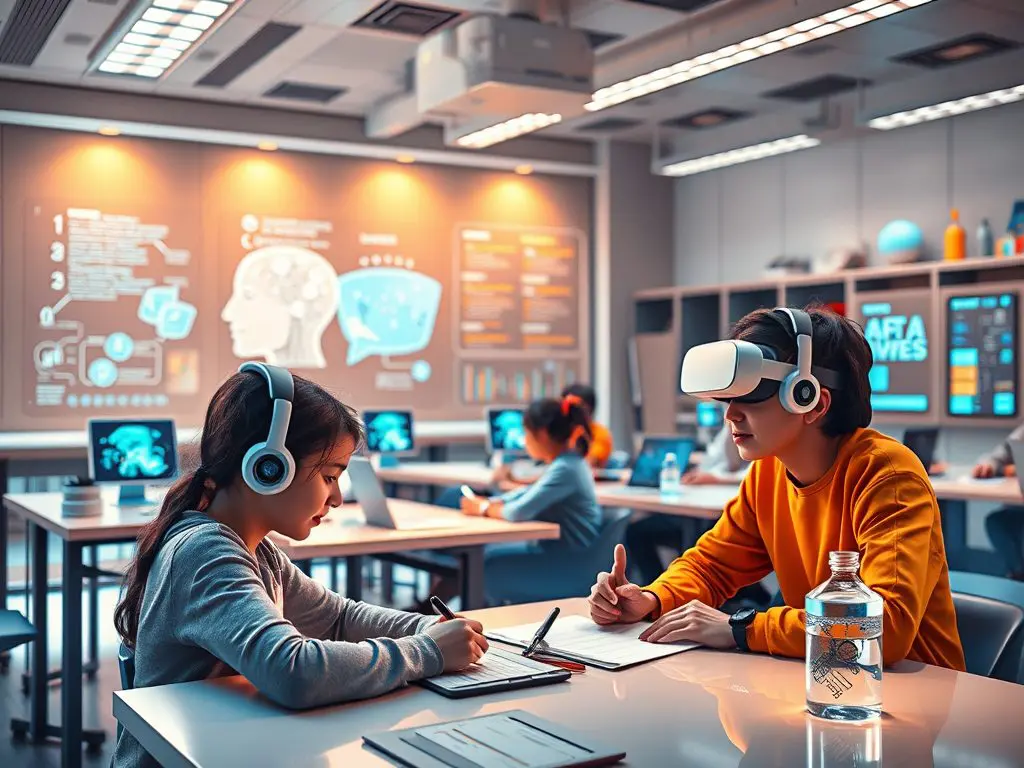
Have you ever wondered what classrooms will look like in 2025? 🤔
The answer might surprise you! Gone are the days of silent rows and chalk-covered blackboards. Today’s modern teaching methods are creating dynamic learning environments that would seem like science fiction just a decade ago.

In 2025, modern teaching methods are fundamentally transforming how students learn and teachers teach. From AI-powered personalized learning to immersive virtual reality experiences, classrooms are becoming interactive hubs of innovation. This shift isn’t just about adding technology—it’s about creating more engaging, effective, and inclusive learning experiences for every student.
What’s driving this educational revolution? The answer lies in the perfect storm of technological advancement, changing student expectations, and the lessons learned from the pandemic’s forced digital transformation.
The Digital Revolution in Education 💻
The interactive learning landscape has evolved dramatically. According to 2025 research, dynamic visual content and multimedia experiences are now the cornerstone of effective education. Students no longer passively absorb information—they actively engage with it.
Key digital trends reshaping classrooms:
- AI-driven personalized learning systems that adapt to each student’s pace
- Gamification elements that make learning feel like play
- Microlearning modules for bite-sized knowledge consumption
- Mobile-first learning platforms accessible anywhere, anytime
Think about it: When was the last time you learned something without using digital tools? Today’s students are digital natives who expect their education to match their tech-savvy lifestyle.
The Numbers Don’t Lie 📊
Recent studies show that classroom technology integration has increased student engagement by 67% and improved retention rates by 45%. These aren’t just statistics—they represent real students achieving better outcomes through innovative teaching approaches.
Interactive Learning Takes Center Stage 🎯
Interactive learning has become the gold standard for modern education. Instead of one-way lectures, classrooms now buzz with collaborative activities, real-time polling, and peer-to-peer learning.
Popular interactive methods include:
- Live polls and quizzes using platforms like Kahoot and Quizizz
- Collaborative projects through Google Classroom
- Interactive whiteboards for hands-on problem-solving
- Breakout rooms for small group discussions
- Real-time feedback systems
But here’s the question: How do these methods actually impact student learning? The answer is profound. Interactive learning doesn’t just keep students awake—it helps them develop critical thinking, communication skills, and the ability to work in teams.
The Engagement Factor 🔥
Students report feeling 73% more motivated when learning through interactive methods. Why? Because they’re not just consuming content—they’re creating, discussing, and applying knowledge in real-time.
AI-Powered Personalized Education 🤖
Artificial Intelligence is revolutionizing how we approach individual learning needs. In 2025, AI-enabled technologies like facial recognition, natural language processing, and machine learning are making classrooms more responsive than ever.
How AI is transforming education:
- Adaptive learning platforms that adjust difficulty based on student performance
- Intelligent tutoring systems providing 24/7 support
- Predictive analytics identifying students who need extra help
- Automated grading freeing up teacher time for meaningful interactions
Programs like M.Ed Curriculum and Instruction are training educators to leverage these AI tools effectively, creating learning experiences tailored to each student’s unique needs and learning style.

Consider this: What if every student had a personal tutor available 24/7? That’s essentially what AI-powered education provides—personalized guidance at scale.
Virtual and Augmented Reality in Classrooms 🥽
Virtual Reality (VR) and Augmented Reality (AR) are turning abstract concepts into tangible experiences. Imagine studying ancient Rome by walking through the Colosseum or exploring molecular structures in 3D space.
VR/AR applications in education:
- Virtual field trips to historical sites and natural wonders
- 3D anatomy lessons for medical students
- Immersive language learning in virtual environments
- Scientific simulations for safe experimentation
- Historical recreations bringing the past to life
The impact? Students retain 90% of information when they experience it through VR, compared to just 10% from traditional reading methods. That’s a game-changing difference!
Breaking Down Barriers 🌍
VR and AR don’t just make learning more engaging—they make it more accessible. Students who can’t afford field trips can now explore the world from their classroom. Those with learning disabilities can experience concepts in ways that work best for them.
The Evolution of Teacher Roles 👩🏫
Modern teaching methods have fundamentally changed what it means to be an educator. Teachers are evolving from information deliverers to learning facilitators, mentors, and coaches.
The new teacher role includes:
- Curating reliable information in an age of information overload
- Facilitating discussions rather than delivering monologues
- Providing emotional support and social-emotional learning
- Adapting to individual learning styles using data insights
- Collaborating with AI tools to enhance instruction
Here’s the reality: Today’s teachers need to be part educator, part technologist, and part counselor. It’s challenging, but it’s also incredibly rewarding when you see students thrive in these dynamic environments.
The Human Touch Remains Essential 💝
Despite all the technology, the human connection between teacher and student remains irreplaceable. AI can personalize content, but only a human teacher can inspire, motivate, and provide the emotional support students need to succeed.
Student-Centered Learning Approaches 🎓
Student-centered learning puts learners at the heart of the educational process. Instead of passive recipients, students become active participants in their own education journey.
Key elements of student-centered learning:
- Choice in learning paths and project topics
- Self-paced progression through material
- Collaborative problem-solving with peers
- Real-world application of classroom concepts
- Regular self-reflection and goal-setting
The flipped classroom model exemplifies this approach—students learn new content at home through online resources, then use class time for application, discussion, and deeper exploration.
Ask yourself: When did you learn best—when someone lectured at you, or when you actively engaged with the material? The answer explains why student-centered approaches are so effective.
Practical Implementation Strategies 💡
Teachers:
- Start small with one interactive tool per week
- Use data from online platforms to identify struggling students
- Blend traditional methods with new technologies
- Create opportunities for peer collaboration
- Provide multiple ways for students to demonstrate learning
Parents:
- Ask about your child’s learning experiences, not just grades
- Support technology use at home for educational purposes
- Encourage hands-on learning through experiments and projects
- Engage in discussions about what they’re learning in school
Schools:
- Invest in teacher training alongside technology
- Create flexible learning spaces that support collaboration
- Develop policies that balance screen time with offline activities
- Foster a culture of innovation and experimentation
The Implementation Challenge 🎯
What’s the biggest obstacle to implementing modern teaching methods? It’s not technology—it’s change management. Successfully transforming education requires buy-in from teachers, administrators, parents, and students.
Challenges and Solutions 🛠️
Common challenges:
- Teacher resistance to new technologies
- Budget constraints for technology upgrades
- Digital divide affecting student access
- Screen time concerns from parents
- Assessment difficulties with new learning methods
Practical solutions:
- Gradual implementation rather than wholesale changes
- Comprehensive training programs for educators
- Community partnerships to provide device access
- Balanced approaches combining digital and offline learning
- New assessment methods that measure 21st-century skills
Remember: Every challenge is an opportunity to innovate and improve. The schools that embrace these challenges today will be the educational leaders of tomorrow.
FAQ: Modern Teaching Methods 🤔
Q: Will technology replace teachers? A: No! Technology enhances teaching but can’t replace the human connection, empathy, and inspiration that great teachers provide.
Q: How do we ensure all students have equal access to these technologies? A: Through community partnerships, government initiatives, and creative funding solutions that prioritize equity in education.
Q: What about students who learn better with traditional methods? A: Modern education isn’t about replacing everything—it’s about providing multiple pathways to learning so every student can succeed.
Q: How do we measure success with these new methods? A: Success is measured not just by test scores, but by student engagement, critical thinking skills, creativity, and preparation for future careers.
The Future is Now 🌟
Modern teaching methods aren’t just changing classrooms—they’re preparing students for a future we can barely imagine. By embracing interactive learning, classroom technology, and personalized education, we’re creating learning environments that inspire curiosity, foster creativity, and develop the skills students need to thrive in the 21st century.
The question isn’t whether these changes are coming—they’re already here. The question is: How quickly can we adapt to ensure every student benefits from these incredible innovations?
As we look toward the future of education, one thing is clear: the classrooms of 2025 are more engaging, more inclusive, and more effective than ever before. And this is just the beginning! 🚀
What modern teaching method excites you most? Share your thoughts and experiences in the comments below! 👇
Ready to explore more innovative education strategies? Check out our comprehensive courses on modern teaching techniques and discover how you can transform your own learning or teaching approach!
Key takeaways:
- Modern teaching methods prioritize interaction and engagement over passive learning
- AI and VR technologies are making personalized education accessible to all students
- Teachers are evolving into facilitators and mentors rather than just information deliverers
- Student-centered approaches put learners in control of their educational journey
- The future of education balances technology with essential human connections






Leave a Reply