
📚 Mondosol Help Center
Find answers to all your questions about our coaching, courses, and services
Business & Coaching
Master global business success through expert multilingual coaching and the Power Hour Method
1 articleLearning & Education
Master languages faster through cultural immersion and innovative education approaches
11 articlesTravel & Accommodation
Professional travel and accommodation services for educational experiences
16 articlesBooking & Reservations
Streamline your booking and reservation experience with expert guidance
13 articlesGuest Posting
Share your expertise in travel, education, and personal development
6 articlesAffiliate Program
Join our lucrative affiliate program with 50% commissions and €2 sign-up bonus
Coming soonPricing & Payments
Transparent pricing structure for all educational services
1 articlePlatform & Support
Comprehensive support for account management and technical assistance
1 articleAbout Mondosol
Discover our mission to transform global learning through innovative education
Coming soon🔥 Most Popular Questions
Privacy & Security (9)
Complete transparency on what personal data Mondosol collects. Learn about account information, learning data, payment details, technical data, and your rights to access, correct, or delete your information.
Transparency is the foundation of trust. We believe you have the right to know exactly what information we collect, why we collect it, and how we use it. Here’s a complete breakdown of the personal data Mondosol collects.
👤 Account Information
When you create a Mondosol account, we collect:
Required Information
- Full Name: To personalize your experience and address you properly
- Email Address: For account verification, login, and important communications
- Username: Your unique identifier on the platform
- Password: Encrypted and never stored in plain text
Optional Information
- Profile Picture: To personalize your learning profile
- Bio/Description: To share information with the community
- Location/Country: To provide localized content and comply with regional regulations
- Language Preferences: To deliver content in your preferred language(s)
Why We Collect This: To create and manage your account, verify your identity, and provide personalized services.
📚 Learning & Course Data
To track your progress and improve your learning experience:
Course Activity
- Enrollment Dates: When you start each course
- Progress Tracking: Lessons completed, modules finished
- Time Spent: Duration on each lesson and course
- Completion Status: Courses finished and certificates earned
Assessment Data
- Quiz Results: Scores and answers (for feedback and improvement)
- Assignment Submissions: Your work and instructor feedback
- Test Performance: Assessment results and analytics
Learning Preferences
- Course Interests: Topics you’re interested in
- Learning Goals: Your stated objectives
- Skill Levels: Self-reported or assessed proficiency
- Preferred Learning Pace: Fast-track or standard progression
Why We Collect This: To track your progress, provide certificates, personalize recommendations, and improve course content.
💳 Payment & Billing Information
When you make a purchase:
Billing Details
- Billing Name: Name on payment method
- Billing Address: Required for payment processing
- Country/Region: For tax calculations and compliance
- VAT/Tax ID: If applicable for business purchases
Payment Information
- Payment Method Type: Credit card, PayPal, etc.
- Last 4 Digits: For payment method identification
- Transaction History: Purchase dates, amounts, and order details
Important: We never store complete credit card numbers. All payment processing is handled by certified third-party processors (Stripe, PayPal) that are PCI DSS compliant.
Why We Collect This: To process payments, issue invoices, handle refunds, and comply with financial regulations.
💻 Technical & Usage Data
To improve platform performance and user experience:
Device Information
- IP Address: For security, fraud prevention, and geographic content delivery
- Browser Type & Version: To ensure compatibility
- Operating System: To optimize platform performance
- Device Type: Desktop, mobile, or tablet for responsive design
Usage Analytics
- Pages Visited: Which pages you view and how often
- Click Patterns: What buttons and links you interact with
- Session Duration: How long you spend on the platform
- Referral Source: How you found Mondosol (search, social media, direct)
Cookies & Tracking
- Essential Cookies: Required for platform functionality
- Analytics Cookies: To understand user behavior (you can opt-out)
- Marketing Cookies: For personalized advertising (you can opt-out)
Why We Collect This: To improve platform performance, fix bugs, understand user behavior, and enhance user experience.
📧 Communication Data
When you interact with us:
Email Communications
- Support Tickets: Your questions and our responses
- Newsletter Subscriptions: Topics you’re interested in
- Marketing Preferences: What communications you want to receive
- Unsubscribe Requests: Your opt-out preferences
Community Interactions
- Comments & Reviews: Your feedback on courses
- Forum Posts: Community discussions and contributions
- Messages: Direct communications with instructors or support
Why We Collect This: To provide customer support, send requested information, and facilitate community interaction.
🤝 Social Media & Third-Party Data
If you connect social accounts or use third-party services:
- Social Profile Information: Name, profile picture, email (if you sign up via Facebook, Google, LinkedIn)
- Third-Party Integrations: Data from connected apps (with your permission)
- Affiliate Tracking: If you arrive through an affiliate link
Why We Collect This: To simplify account creation, enable social sharing, and track affiliate referrals.
🚫 What We DON’T Collect
We respect your privacy and never collect:
- ❌ Sensitive personal data (race, religion, political views, health information)
- ❌ Data from children under 13 without parental consent
- ❌ Information from your device without permission
- ❌ Data unrelated to our services
- ❌ Information we don’t need for legitimate purposes
📊 How Long We Keep Your Data
We follow data minimization principles:
- Active Accounts: Data retained while your account is active
- Inactive Accounts: Deleted after 3 years of inactivity (with prior notice)
- Legal Requirements: Some data retained longer for legal/tax compliance (typically 7 years)
- Marketing Data: Removed immediately upon unsubscribe
- Right to Erasure: You can request deletion anytime
🔒 Your Data Rights
You have complete control over your data:
- Access: Request a copy of all data we hold
- Correction: Update inaccurate information
- Deletion: Request complete data removal
- Portability: Receive your data in machine-readable format
- Objection: Opt-out of certain data processing
Learn more about your data rights →
🔗 Related Resources
Privacy & Security:
External Resources:
- GDPR Data Collection Guidelines – European standards
- CCPA Consumer Rights – California privacy law
- ICO Data Protection Guide – UK regulations
📞 Questions About Your Data?
We’re committed to transparency. If you have questions about what data we collect:
- Email: eliomondello@mondosol.com
- Subject: “Data Collection Inquiry”
- Response Time: Within 24 hours
We collect only what we need, protect what we collect, and respect your choices. 🔒
Last Updated: October 8, 2025
Complete transparency on what personal data Mondosol collects. Learn about account information, learning data, payment details, technical data, and your rights to access, correct, or delete your information.
Your personal information deserves the highest level of protection. At Mondosol, we implement comprehensive security measures to ensure your data remains safe, private, and secure at all times. In this guide, we’ll walk you through every layer of protection we’ve built to safeguard your information.
🛡️ Our Multi-Layer Security Approach
Rather than relying on just one security measure, we use multiple layers of protection to safeguard your personal information. As a result, your data benefits from redundant security systems that work together seamlessly.
SSL/TLS Encryption
First and foremost, we encrypt all data transmitted between your device and our servers using industry-standard SSL/TLS protocols. Consequently, your information becomes scrambled during transmission, making it unreadable to unauthorized parties.
In practice, this means:
- When you log in, your password travels encrypted through the internet
- Similarly, when you submit course work, the content remains protected
- Additionally, all payment information transfers through secure channels
- Therefore, hackers cannot intercept your data even if they access the network
To verify this protection, always look for the padlock icon in your browser’s address bar when using Mondosol. Furthermore, you can click the padlock to view our security certificate details.
Secure Server Infrastructure
Beyond encryption in transit, we also protect your data at rest. Specifically, we store your personal data on secure servers with restricted physical and digital access.
To accomplish this, we implement several protective measures:
- State-of-the-art firewalls protect against unauthorized intrusion attempts
- In addition, our 24/7 server monitoring detects and responds to potential threats in real-time
- Moreover, we maintain physical security at our data centers with biometric access controls
- As an extra precaution, we conduct regular security perimeter assessments
As a result of these measures, your data remains protected even when you’re not actively using the platform.
Data Encryption at Rest
Not only do we encrypt data during transmission, but also when we store it on our servers. In other words, your sensitive information stays encrypted whether it’s moving or sitting in our database.
To enhance this protection further, we implement additional safeguards:
- First, we manage encryption keys separately from the data itself
- Second, we rotate encryption keys regularly to minimize risk
- Third, we require multi-factor authentication for all system access
- Finally, we maintain encrypted backups in geographically separate locations
Therefore, even in the unlikely event of a server breach, your data remains unreadable without the encryption keys.
🔍 Regular Security Audits & Testing
Rather than waiting for problems to occur, we proactively identify and address vulnerabilities through comprehensive testing programs.
Quarterly Security Assessments
Every three months, independent security experts thoroughly review our systems. During these assessments, they:
- First, examine our infrastructure for potential weaknesses
- Then, test our security protocols against current threat models
- Subsequently, provide detailed recommendations for improvements
- Finally, verify that we’ve implemented previous recommendations
As a result, we stay ahead of emerging security threats and maintain industry-leading protection standards.
Penetration Testing
In addition to audits, we conduct regular penetration testing. Essentially, this means we hire ethical hackers to attempt breaking into our systems. Through this process, we:
- Initially, simulate real-world attack scenarios
- Next, identify vulnerabilities before malicious actors can exploit them
- Then, patch any discovered weaknesses immediately
- Ultimately, strengthen our defenses based on test results
Consequently, our security improves continuously through controlled testing.
Vulnerability Scanning
Beyond manual testing, automated tools continuously monitor for security gaps. Specifically, these systems:
- Constantly scan for known vulnerabilities in our software
- Immediately alert our security team when they detect potential issues
- Subsequently, trigger automatic patching for critical vulnerabilities
- Finally, generate reports for our security review process
Therefore, we can respond to new threats within hours rather than days or weeks.
Code Reviews
Before deploying any updates, our team conducts security-focused code reviews. During this process, we:
- First, examine all new code for security vulnerabilities
- Then, verify compliance with security best practices
- Additionally, test for common attack vectors like SQL injection
- Finally, require approval from multiple security team members
As a result, we prevent security issues from reaching our production environment.
📊 Data Minimization Principle
Unlike many platforms that collect excessive information, we only collect what we truly need. In fact, this principle guides every data collection decision we make.
Purpose Limitation
Specifically, we collect data only for specific, legitimate purposes. For example:
- When you create an account, we collect your email for login and communication
- Similarly, when you enroll in a course, we track your progress for certification
- However, we never collect data “just in case” we might need it later
- Instead, every data point serves a clear, documented purpose
Therefore, we minimize the amount of personal information at risk.
Storage Limitation
Furthermore, we retain information only as long as necessary. In practice, this means:
- Active account data remains available while you use our services
- However, after three years of inactivity, we send deletion notices
- Subsequently, we remove inactive account data unless you respond
- Additionally, we delete temporary data like session tokens immediately after use
As a result, we don’t accumulate unnecessary personal information over time.
Regular Data Purging
In addition to automated deletion, we conduct regular data purging reviews. During these reviews, we:
- First, identify outdated or unnecessary information
- Then, verify that legal retention requirements don’t apply
- Next, securely delete the identified data using military-grade methods
- Finally, document the deletion for compliance purposes
Consequently, your data footprint remains minimal and manageable.
No Excessive Collection
Most importantly, we never ask for information we don’t need. For instance:
- We don’t request your social security number or national ID
- Similarly, we don’t collect sensitive data about race, religion, or health
- Instead, we limit collection to essential account and learning information
- Therefore, you share only what’s necessary for your educational experience
As a result, you maintain greater privacy and control over your personal information.
👥 Strict Access Controls
Not everyone can access your data. In fact, we implement rigorous access controls to ensure only authorized personnel can view your information.
Role-Based Access
First and foremost, team members access only the data necessary for their specific role. For example:
- Customer support can view account details but not payment information
- Meanwhile, instructors see only their students’ course progress
- Similarly, developers access anonymized test data, not production information
- In contrast, only senior security personnel can access full system logs
Therefore, we minimize the number of people who can view your complete profile.
Authentication Protocols
Beyond role restrictions, we implement multi-factor authentication for all system access. Specifically, this means:
- First, employees must enter their password
- Then, they must provide a second factor (authenticator app or hardware token)
- Additionally, they must access systems from approved devices only
- Furthermore, suspicious login attempts trigger immediate security reviews
As a result, unauthorized individuals cannot access our systems even if they steal a password.
Activity Logging
To ensure accountability, we log and monitor all data access. In practice, this means:
- Every time someone views your data, we record who, when, and why
- Subsequently, security systems analyze these logs for unusual patterns
- If suspicious activity occurs, automated alerts notify our security team immediately
- Finally, we retain these logs for audit and compliance purposes
Consequently, we can detect and investigate any unauthorized access attempts.
Background Checks
Before hiring, all employees undergo comprehensive security clearance checks. This process includes:
- First, criminal background verification
- Then, employment history validation
- Additionally, reference checks from previous employers
- Finally, security training and confidentiality agreement signing
Therefore, we ensure that only trustworthy individuals handle your data.
Confidentiality Agreements
In addition to background checks, legal obligations ensure we protect your privacy. Specifically:
- All employees sign comprehensive confidentiality agreements
- These agreements legally bind them to protect user data
- Furthermore, violations result in immediate termination and legal action
- Moreover, these obligations continue even after employment ends
As a result, your data remains protected by both technical and legal safeguards.
💾 Secure Backup Systems
To protect against data loss, we maintain robust backup systems. However, these backups receive the same security protection as your live data.
Encrypted Backups
First and foremost, we fully encrypt all backups using the same standards as production data. This means:
- Even if someone steals backup media, they cannot read the data
- Additionally, we use separate encryption keys for backups and production
- Furthermore, we rotate backup encryption keys on a regular schedule
- Therefore, your historical data remains as secure as your current information
Geographic Redundancy
Beyond encryption, we store backups in multiple secure locations. Specifically:
- Primary backups reside in our main data center
- Secondary backups exist in a geographically separate facility
- Additionally, we maintain offline backups for disaster recovery
- Moreover, all backup locations meet the same security standards
As a result, your data survives even catastrophic events like natural disasters.
Regular Testing
Unlike many organizations, we don’t just create backups—we test them. In fact, we test backup restoration procedures monthly to verify effectiveness. During these tests, we:
- First, select random backup files for restoration
- Then, restore them to a test environment
- Next, verify data integrity and completeness
- Finally, document any issues and implement improvements
Consequently, we know our backups will work when we need them.
Disaster Recovery Plan
In addition to backups, we maintain a comprehensive disaster recovery plan. This plan ensures:
- First, we can restore services within hours of any incident
- Second, your data remains accessible even during emergencies
- Third, we maintain business continuity during disasters
- Finally, we communicate clearly with users during any service interruptions
Therefore, you can trust that your learning progress and data remain safe.
🔐 Payment Security
Because financial information requires special protection, we implement additional security measures for all payment processing.
PCI DSS Compliance
First and foremost, we follow Payment Card Industry Data Security Standards (PCI DSS). In practice, this means:
- We undergo annual security assessments by certified auditors
- Additionally, we maintain network segmentation to isolate payment systems
- Furthermore, we implement strict access controls for payment data
- Moreover, we conduct quarterly network vulnerability scans
As a result, your payment information receives bank-level security protection.
Third-Party Processors
Rather than handling payments directly, we process all transactions through certified secure providers like Stripe and PayPal. This approach offers several advantages:
- First, these processors specialize in payment security
- Second, they maintain PCI DSS Level 1 certification (the highest standard)
- Additionally, they handle fraud detection and prevention
- Furthermore, they assume liability for payment security
Therefore, your financial information benefits from industry-leading protection.
No Card Storage
Most importantly, we never store complete credit card numbers. Instead:
- Payment processors store your card details securely
- We receive only the last four digits for display purposes
- Additionally, we never see or store CVV security codes
- Furthermore, we cannot access your full payment information
Consequently, even if someone breaches our systems, they cannot steal your credit card data.
Tokenization
In addition to not storing cards, we replace payment information with secure tokens. Essentially, this means:
- When you save a payment method, we receive a random token
- This token references your card without containing actual card data
- Subsequently, we use this token for future transactions
- However, the token is useless to anyone except our payment processor
Therefore, your payment information remains protected through multiple security layers.
📱 Additional Security Measures
Beyond the core protections, we implement several additional security measures to safeguard your data.
GDPR Compliance
First, we maintain full compliance with EU General Data Protection Regulation (GDPR). This means:
- We respect all your data rights (access, deletion, portability)
- Additionally, we obtain clear consent before collecting data
- Furthermore, we process data lawfully and transparently
- Moreover, we report any breaches within 72 hours
Therefore, you benefit from Europe’s strongest privacy protections regardless of your location.
Privacy by Design
Rather than adding security later, we build it into every feature from the ground up. In practice, this means:
- When designing new features, we consider privacy implications first
- Subsequently, we implement privacy-protective defaults
- Additionally, we minimize data collection in all new features
- Finally, we conduct privacy impact assessments before launch
As a result, security and privacy are fundamental to our platform, not afterthoughts.
Incident Response Plan
In case of security incidents, we maintain rapid response procedures. Our plan includes:
- Immediate containment protocols to limit damage
- Subsequently, forensic investigation to understand the scope
- Then, user notification within required timeframes
- Finally, remediation and prevention of future incidents
Therefore, we can respond quickly and effectively to any security event.
User Education
Because security is a partnership, we provide resources to help you protect your own account. These resources include:
- Security best practices guides and tutorials
- Regular updates about emerging threats
- Additionally, tips for creating strong passwords
- Furthermore, guidance on recognizing phishing attempts
Consequently, you can take an active role in protecting your account.
Regular Updates
Finally, we keep our systems and software current with security patches. Specifically:
- We monitor security bulletins from all our software vendors
- Then, we test patches in our development environment
- Subsequently, we deploy critical patches within 24-48 hours
- Additionally, we conduct regular system updates during maintenance windows
As a result, we protect against newly discovered vulnerabilities quickly.
🚨 What We Do in Case of a Breach
In the unlikely event of a security breach, we take immediate and comprehensive action to protect you.
Immediate Containment
First and foremost, we isolate the threat within minutes of detection. This involves:
- Immediately, our automated systems detect unusual activity
- Then, they trigger containment protocols automatically
- Subsequently, our security team assesses the situation
- Finally, we implement additional manual containment measures
Therefore, we minimize the potential impact of any security incident.
Investigation
Once contained, we conduct thorough forensic analysis to understand the scope. During this investigation, we:
- First, determine what data the attackers accessed
- Then, identify how they gained access
- Next, assess the extent of the compromise
- Finally, document all findings for regulatory reporting
Consequently, we understand exactly what happened and can respond appropriately.
User Notification
In accordance with GDPR, we notify affected users within 72 hours. Our notification includes:
- First, a clear explanation of what happened
- Then, details about what data was affected
- Additionally, steps we’re taking to address the issue
- Furthermore, recommendations for protecting yourself
- Finally, contact information for questions and support
Therefore, you receive timely and transparent communication about any incidents affecting your data.
Remediation
After notification, we patch vulnerabilities immediately. This process includes:
- First, fixing the specific vulnerability that was exploited
- Then, conducting a comprehensive security review
- Subsequently, implementing additional protective measures
- Finally, retesting to ensure the issue is fully resolved
As a result, we prevent similar incidents from occurring in the future.
Transparency
Throughout the process, we ensure full disclosure of what happened and our response. Specifically, we:
- Publish detailed incident reports on our website
- Additionally, update users regularly as we learn more
- Furthermore, share lessons learned with the security community
- Moreover, implement recommended improvements from external experts
Therefore, we maintain accountability and continuously improve our security posture.
🔗 Related Resources
To learn more about your security and privacy, explore these helpful resources:
Last Updated: October 8, 2025
Leave a Reply
Learn how to request your personal data from Mondosol. Step-by-step guide to submitting data access requests, understanding your data package, and exercising your privacy rights under GDPR, CCPA, and other regulations.
You have the absolute right to access all personal data we hold about you. At Mondosol, we’ve made the data request process simple, transparent, and efficient. In this comprehensive guide, we’ll walk you through every step of requesting, receiving, and understanding your personal information.
🔍 Understanding Data Access Rights
Your right to access personal data is fundamental under privacy regulations worldwide. This means you can request a complete copy of all information we’ve collected about you.

What Data You Can Request
When you request your data, you’ll receive comprehensive information including:
Personal Account Information:
- Full name and contact details
- Email address and phone number
- Account creation date and history
- Profile information and preferences
- Login credentials (encrypted, not plain text)
Learning and Course Data:
- Course enrollments and completion status
- Quiz results and assessment scores
- Certificates earned and achievements
- Learning progress across all courses
- Time spent on lessons and modules
Communication Records:
- Support tickets and correspondence
- Newsletter subscriptions and preferences
- Email communications we’ve sent
- Feedback and reviews you’ve submitted
Technical and Usage Data:
- Login history with dates and locations
- Device information used to access Mondosol
- IP addresses and browser details
- Activity logs showing platform interactions
Payment and Billing Information:
- Purchase history and transaction records
- Billing addresses and payment methods (last 4 digits only)
- Invoices and receipts for all purchases
- Refund records if applicable
According to privacy experts at the International Association of Privacy Professionals, comprehensive data access is essential for transparency and trust.
📧 How to Submit a Data Request
Requesting your data is straightforward. Follow these simple steps:
Step-by-Step Request Process
Step 1: Compose Your Email
Send your request to: eliomondello@mondosol.com
Subject Line: “Data Access Request”
Email Template:
Subject: Data Access Request
Dear Mondosol Privacy Team,
I am writing to request a complete copy of all personal data you hold about me under [GDPR/CCPA/applicable regulation].
Account Email: [your registered email]
Full Name: [your full name]
Additional Verification: [account creation date or last purchase, if known]
Please provide my data in a commonly used, machine-readable format.
Thank you,
[Your Name]
Step 2: Identity Verification
To protect your privacy, we verify your identity before releasing data:
- We’ll confirm your email address matches our records
- We may ask security questions about your account
- We might request additional verification for sensitive requests
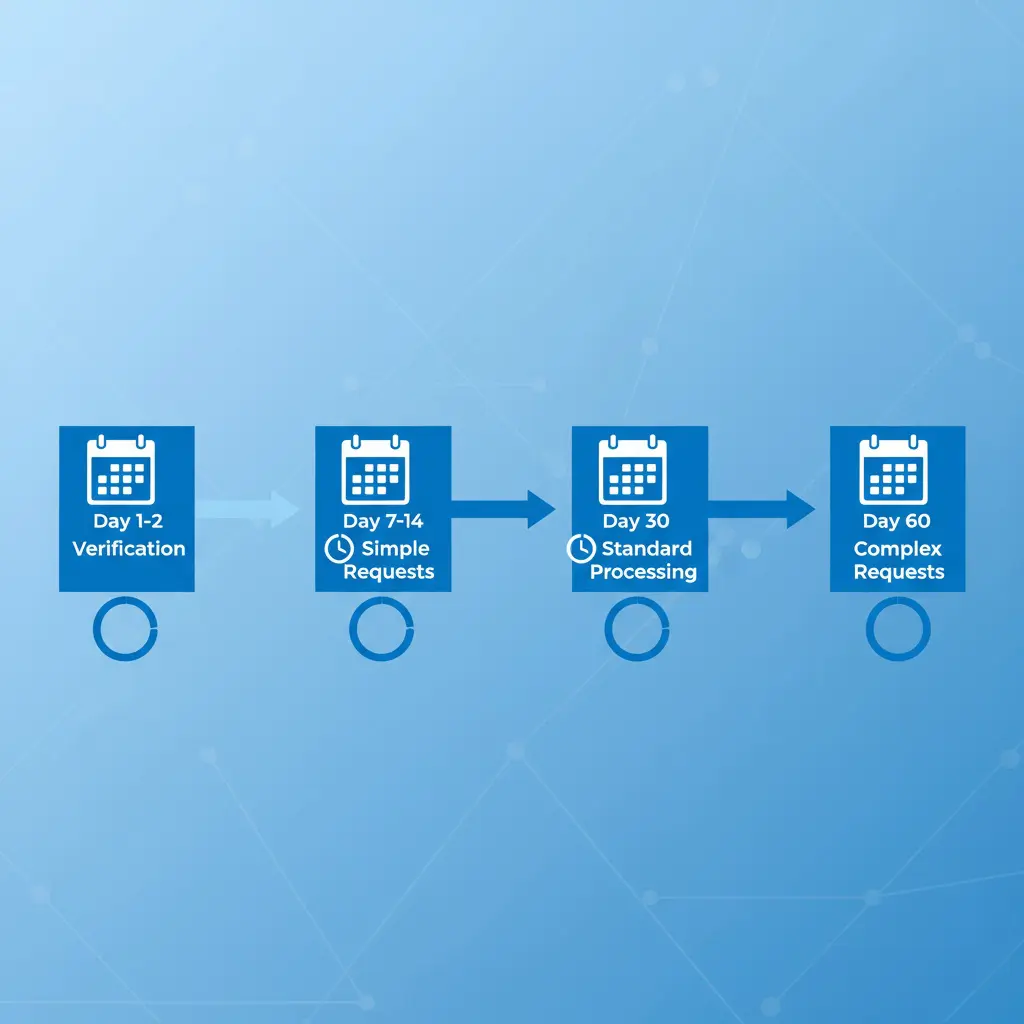
- This process typically takes 1-2 business days
Why verification matters: According to the Federal Trade Commission, proper identity verification prevents unauthorized data access.
Step 3: Processing Time
We process data requests within regulatory timeframes:
- Standard processing: 30 days from verification
- Complex requests: Up to 60 days (we’ll notify you if extension needed)
- Simple requests: Often completed within 7-14 days
- Urgent requests: Contact us to discuss expedited processing
Step 4: Receiving Your Data
Once processed, we’ll deliver your data securely:
Delivery Methods:
- Secure email with encrypted attachment
- Password-protected ZIP file
- Secure download link (expires after 7 days)
- Physical mail upon request (additional processing time)
Data Formats:
- PDF for human-readable documents
- CSV for spreadsheet data
- JSON for machine-readable structured data
- Combined package with all formats
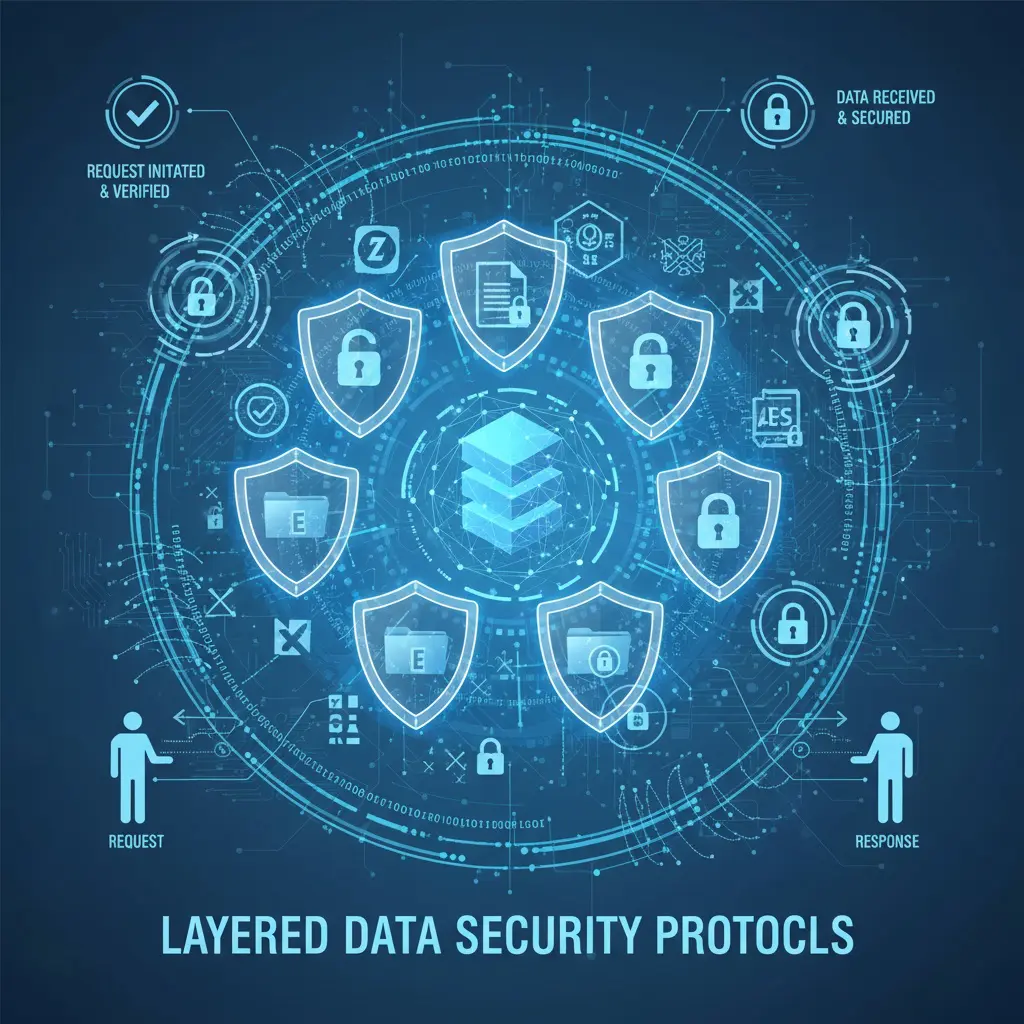
🔐 Security and Privacy During Requests
We take extraordinary measures to protect your data during the request process:
Security Measures
Throughout the process, we ensure:
- Encrypted transmission of all data files
- Secure storage of request documentation
- Access logging for accountability
- Automatic deletion of temporary files after delivery
- Verification protocols to prevent unauthorized access
Learn more about our security practices.
Privacy Protections
We protect your privacy by:
- Never sharing your request with third parties
- Limiting access to authorized privacy team members only
- Documenting all request handling procedures
- Maintaining confidentiality throughout the process
📊 Understanding Your Data Package
When you receive your data, here’s how to interpret it:
Data Package Contents
Your package typically includes:
1. Summary Document (PDF):
- Overview of all data categories
- Explanation of each data type
- Retention periods for different data
- Sources of data collection
2. Detailed Data Files:
- Account_Information.csv: Personal and profile data
- Learning_Records.csv: Course progress and results
- Communication_History.pdf: Email and support records
- Activity_Logs.csv: Login and usage history
- Payment_Records.pdf: Transaction and billing information
3. Metadata and Context:
- Data dictionary explaining field names
- Collection dates for each data point
- Legal basis for processing
- Retention schedules and deletion dates
Reading Your Data Files
Tips for understanding your data:
- Start with the summary document for an overview
- Use spreadsheet software (Excel, Google Sheets) for CSV files
- Check the data dictionary for unfamiliar terms
- Compare dates to understand data collection timeline
- Note retention periods to know when data will be deleted
If you need help interpreting your data, contact eliomondello@mondosol.com.
🔄 What Happens After Your Request
Beyond receiving your data, you have additional options:
Post-Request Actions
After reviewing your data, you can request :
Corrections:
- Identify any inaccurate information
- Submit correction requests with supporting documentation
- We’ll update records within 30 days
- Receive confirmation once corrections are made
Deletion:
- Decide if you want data deleted
- Submit a separate deletion request
- Understand that some data may be retained for legal compliance
- Receive confirmation of deletion within 30 days
Restrictions:
- Limit how we process certain data
- Temporarily suspend processing during disputes
- Maintain data without active use
- Resume processing only with your consent
To export to Another Service:
- Use machine-readable formats for portability
- Transfer data to competitors or other platforms
- Exercise your right to data portability
- Maintain a personal backup of your information
🌍 International Data Requests
Regardless of your location, we honor data access requests:
Region-Specific Considerations
European Union (GDPR):
- 30-day response time (extendable to 60 days)
- Free of charge for reasonable requests
- Machine-readable format provided
- Right to complain to supervisory authority
California (CCPA/CPRA):
- 45-day response time (extendable to 90 days)
- Twice yearly requests allowed
- No discrimination for exercising rights
- Specific categories of data disclosed
United Kingdom (UK GDPR):
- One month response time
- Free access to personal data
- ICO complaint option available
- Same rights as EU GDPR
Canada (PIPEDA):
- 30-day response time
- Reasonable cost may apply for extensive requests
- Privacy Commissioner complaint option
- Access to all personal information
Learn about regional privacy laws from OneTrust DataGuidance.

❓ Common Data Request Questions
Here are answers to frequently asked questions:
FAQ About Data Requests
Q: Is there a fee for requesting my data?
A: No, data requests are completely free for reasonable requests. However, if you make excessive or repetitive requests, we may charge a reasonable administrative fee or refuse the request.
Q: How often can I request my data?
A: You can request your data anytime. However, if you’ve recently received a complete data package, we may ask if you want an updated version rather than a full reprocessing.
Q: Can someone else request my data on my behalf?
A: Yes, with proper authorization. You must provide:
- Written consent authorizing the representative
- Proof of identity for both you and the representative
- Specific scope of what they can access
Q: What if I find errors in my data?
A: Contact us immediately with:
- Specific errors identified
- Correct information with supporting documentation
- We’ll investigate and correct within 30 days
Q: Can I request data for a deleted account?
A: It depends on timing. If your account was recently deleted:
- Within 30 days: We likely still have your data
- After 30 days: Data may be permanently deleted
- Legal retention: Some data kept for 7 years for compliance
Q: Will requesting my data affect my account?
A: No, absolutely not. Requesting your data:
- Doesn’t impact your account status
- Doesn’t affect your access to services
- Doesn’t change your subscription or enrollment
- Is completely confidential
🚨 Urgent Data Access Needs
If you need your data urgently due to legal proceedings or other time-sensitive matters:
Expedited Request Process
Contact us immediately:
- Email: eliomondello@mondosol.com
- Subject: “URGENT: Expedited Data Request”
- Include: Reason for urgency and deadline
We’ll prioritize:
- Legal proceedings: Court orders or subpoenas
- Data breaches: If you suspect unauthorized access
- Account disputes: Billing or service disagreements
- Regulatory investigations: Official inquiries
Expedited processing typically takes 3-7 business days instead of 30 days.
🔗 Related Data Rights Resources
Learn more about your data rights and privacy:
Internal Resources:
External Privacy Resources:
- GDPR Right to Access – European data access rights
- CCPA Data Access – California consumer rights
- Your Data Rights Guide – Comprehensive privacy information
- Data Portability Project – Understanding data portability
📞 Need Help With Your Data Request?
If you have questions about requesting your data:
Contact Our Privacy Team:
- Email: eliomondello@mondosol.com
- Subject: “Data Request Assistance”
- Response Time: Within 24-48 hours
For technical issues:
- Subject: “Data Request Technical Support”
- Include: Error messages or specific problems
- Priority response: Within 12-24 hours
For legal or compliance questions:
- Subject: “Data Request Legal Inquiry”
- Include: Specific regulation or legal requirement
- Expert response: Within 48-72 hours
Your data belongs to you. We’re here to help you access it quickly, securely, and completely. 📋🔒
Last Updated: October 8, 2025
Leave a Reply
Data Protection (3)
Complete transparency on what personal data Mondosol collects. Learn about account information, learning data, payment details, technical data, and your rights to access, correct, or delete your information.
Transparency is the foundation of trust. We believe you have the right to know exactly what information we collect, why we collect it, and how we use it. Here’s a complete breakdown of the personal data Mondosol collects.
👤 Account Information
When you create a Mondosol account, we collect:
Required Information
- Full Name: To personalize your experience and address you properly
- Email Address: For account verification, login, and important communications
- Username: Your unique identifier on the platform
- Password: Encrypted and never stored in plain text
Optional Information
- Profile Picture: To personalize your learning profile
- Bio/Description: To share information with the community
- Location/Country: To provide localized content and comply with regional regulations
- Language Preferences: To deliver content in your preferred language(s)
Why We Collect This: To create and manage your account, verify your identity, and provide personalized services.
📚 Learning & Course Data
To track your progress and improve your learning experience:
Course Activity
- Enrollment Dates: When you start each course
- Progress Tracking: Lessons completed, modules finished
- Time Spent: Duration on each lesson and course
- Completion Status: Courses finished and certificates earned
Assessment Data
- Quiz Results: Scores and answers (for feedback and improvement)
- Assignment Submissions: Your work and instructor feedback
- Test Performance: Assessment results and analytics
Learning Preferences
- Course Interests: Topics you’re interested in
- Learning Goals: Your stated objectives
- Skill Levels: Self-reported or assessed proficiency
- Preferred Learning Pace: Fast-track or standard progression
Why We Collect This: To track your progress, provide certificates, personalize recommendations, and improve course content.
💳 Payment & Billing Information
When you make a purchase:
Billing Details
- Billing Name: Name on payment method
- Billing Address: Required for payment processing
- Country/Region: For tax calculations and compliance
- VAT/Tax ID: If applicable for business purchases
Payment Information
- Payment Method Type: Credit card, PayPal, etc.
- Last 4 Digits: For payment method identification
- Transaction History: Purchase dates, amounts, and order details
Important: We never store complete credit card numbers. All payment processing is handled by certified third-party processors (Stripe, PayPal) that are PCI DSS compliant.
Why We Collect This: To process payments, issue invoices, handle refunds, and comply with financial regulations.
💻 Technical & Usage Data
To improve platform performance and user experience:
Device Information
- IP Address: For security, fraud prevention, and geographic content delivery
- Browser Type & Version: To ensure compatibility
- Operating System: To optimize platform performance
- Device Type: Desktop, mobile, or tablet for responsive design
Usage Analytics
- Pages Visited: Which pages you view and how often
- Click Patterns: What buttons and links you interact with
- Session Duration: How long you spend on the platform
- Referral Source: How you found Mondosol (search, social media, direct)
Cookies & Tracking
- Essential Cookies: Required for platform functionality
- Analytics Cookies: To understand user behavior (you can opt-out)
- Marketing Cookies: For personalized advertising (you can opt-out)
Why We Collect This: To improve platform performance, fix bugs, understand user behavior, and enhance user experience.
📧 Communication Data
When you interact with us:
Email Communications
- Support Tickets: Your questions and our responses
- Newsletter Subscriptions: Topics you’re interested in
- Marketing Preferences: What communications you want to receive
- Unsubscribe Requests: Your opt-out preferences
Community Interactions
- Comments & Reviews: Your feedback on courses
- Forum Posts: Community discussions and contributions
- Messages: Direct communications with instructors or support
Why We Collect This: To provide customer support, send requested information, and facilitate community interaction.
🤝 Social Media & Third-Party Data
If you connect social accounts or use third-party services:
- Social Profile Information: Name, profile picture, email (if you sign up via Facebook, Google, LinkedIn)
- Third-Party Integrations: Data from connected apps (with your permission)
- Affiliate Tracking: If you arrive through an affiliate link
Why We Collect This: To simplify account creation, enable social sharing, and track affiliate referrals.
🚫 What We DON’T Collect
We respect your privacy and never collect:
- ❌ Sensitive personal data (race, religion, political views, health information)
- ❌ Data from children under 13 without parental consent
- ❌ Information from your device without permission
- ❌ Data unrelated to our services
- ❌ Information we don’t need for legitimate purposes
📊 How Long We Keep Your Data
We follow data minimization principles:
- Active Accounts: Data retained while your account is active
- Inactive Accounts: Deleted after 3 years of inactivity (with prior notice)
- Legal Requirements: Some data retained longer for legal/tax compliance (typically 7 years)
- Marketing Data: Removed immediately upon unsubscribe
- Right to Erasure: You can request deletion anytime
🔒 Your Data Rights
You have complete control over your data:
- Access: Request a copy of all data we hold
- Correction: Update inaccurate information
- Deletion: Request complete data removal
- Portability: Receive your data in machine-readable format
- Objection: Opt-out of certain data processing
Learn more about your data rights →
🔗 Related Resources
Privacy & Security:
External Resources:
- GDPR Data Collection Guidelines – European standards
- CCPA Consumer Rights – California privacy law
- ICO Data Protection Guide – UK regulations
📞 Questions About Your Data?
We’re committed to transparency. If you have questions about what data we collect:
- Email: eliomondello@mondosol.com
- Subject: “Data Collection Inquiry”
- Response Time: Within 24 hours
We collect only what we need, protect what we collect, and respect your choices. 🔒
Last Updated: October 8, 2025
Leave a Reply
Complete transparency on what personal data Mondosol collects. Learn about account information, learning data, payment details, technical data, and your rights to access, correct, or delete your information.
Your personal information deserves the highest level of protection. At Mondosol, we implement comprehensive security measures to ensure your data remains safe, private, and secure at all times. In this guide, we’ll walk you through every layer of protection we’ve built to safeguard your information.
🛡️ Our Multi-Layer Security Approach
Rather than relying on just one security measure, we use multiple layers of protection to safeguard your personal information. As a result, your data benefits from redundant security systems that work together seamlessly.
SSL/TLS Encryption
First and foremost, we encrypt all data transmitted between your device and our servers using industry-standard SSL/TLS protocols. Consequently, your information becomes scrambled during transmission, making it unreadable to unauthorized parties.
In practice, this means:
- When you log in, your password travels encrypted through the internet
- Similarly, when you submit course work, the content remains protected
- Additionally, all payment information transfers through secure channels
- Therefore, hackers cannot intercept your data even if they access the network
To verify this protection, always look for the padlock icon in your browser’s address bar when using Mondosol. Furthermore, you can click the padlock to view our security certificate details.
Secure Server Infrastructure
Beyond encryption in transit, we also protect your data at rest. Specifically, we store your personal data on secure servers with restricted physical and digital access.
To accomplish this, we implement several protective measures:
- State-of-the-art firewalls protect against unauthorized intrusion attempts
- In addition, our 24/7 server monitoring detects and responds to potential threats in real-time
- Moreover, we maintain physical security at our data centers with biometric access controls
- As an extra precaution, we conduct regular security perimeter assessments
As a result of these measures, your data remains protected even when you’re not actively using the platform.
Data Encryption at Rest
Not only do we encrypt data during transmission, but also when we store it on our servers. In other words, your sensitive information stays encrypted whether it’s moving or sitting in our database.
To enhance this protection further, we implement additional safeguards:
- First, we manage encryption keys separately from the data itself
- Second, we rotate encryption keys regularly to minimize risk
- Third, we require multi-factor authentication for all system access
- Finally, we maintain encrypted backups in geographically separate locations
Therefore, even in the unlikely event of a server breach, your data remains unreadable without the encryption keys.
🔍 Regular Security Audits & Testing
Rather than waiting for problems to occur, we proactively identify and address vulnerabilities through comprehensive testing programs.
Quarterly Security Assessments
Every three months, independent security experts thoroughly review our systems. During these assessments, they:
- First, examine our infrastructure for potential weaknesses
- Then, test our security protocols against current threat models
- Subsequently, provide detailed recommendations for improvements
- Finally, verify that we’ve implemented previous recommendations
As a result, we stay ahead of emerging security threats and maintain industry-leading protection standards.
Penetration Testing
In addition to audits, we conduct regular penetration testing. Essentially, this means we hire ethical hackers to attempt breaking into our systems. Through this process, we:
- Initially, simulate real-world attack scenarios
- Next, identify vulnerabilities before malicious actors can exploit them
- Then, patch any discovered weaknesses immediately
- Ultimately, strengthen our defenses based on test results
Consequently, our security improves continuously through controlled testing.
Vulnerability Scanning
Beyond manual testing, automated tools continuously monitor for security gaps. Specifically, these systems:
- Constantly scan for known vulnerabilities in our software
- Immediately alert our security team when they detect potential issues
- Subsequently, trigger automatic patching for critical vulnerabilities
- Finally, generate reports for our security review process
Therefore, we can respond to new threats within hours rather than days or weeks.
Code Reviews
Before deploying any updates, our team conducts security-focused code reviews. During this process, we:
- First, examine all new code for security vulnerabilities
- Then, verify compliance with security best practices
- Additionally, test for common attack vectors like SQL injection
- Finally, require approval from multiple security team members
As a result, we prevent security issues from reaching our production environment.
📊 Data Minimization Principle
Unlike many platforms that collect excessive information, we only collect what we truly need. In fact, this principle guides every data collection decision we make.
Purpose Limitation
Specifically, we collect data only for specific, legitimate purposes. For example:
- When you create an account, we collect your email for login and communication
- Similarly, when you enroll in a course, we track your progress for certification
- However, we never collect data “just in case” we might need it later
- Instead, every data point serves a clear, documented purpose
Therefore, we minimize the amount of personal information at risk.
Storage Limitation
Furthermore, we retain information only as long as necessary. In practice, this means:
- Active account data remains available while you use our services
- However, after three years of inactivity, we send deletion notices
- Subsequently, we remove inactive account data unless you respond
- Additionally, we delete temporary data like session tokens immediately after use
As a result, we don’t accumulate unnecessary personal information over time.
Regular Data Purging
In addition to automated deletion, we conduct regular data purging reviews. During these reviews, we:
- First, identify outdated or unnecessary information
- Then, verify that legal retention requirements don’t apply
- Next, securely delete the identified data using military-grade methods
- Finally, document the deletion for compliance purposes
Consequently, your data footprint remains minimal and manageable.
No Excessive Collection
Most importantly, we never ask for information we don’t need. For instance:
- We don’t request your social security number or national ID
- Similarly, we don’t collect sensitive data about race, religion, or health
- Instead, we limit collection to essential account and learning information
- Therefore, you share only what’s necessary for your educational experience
As a result, you maintain greater privacy and control over your personal information.
👥 Strict Access Controls
Not everyone can access your data. In fact, we implement rigorous access controls to ensure only authorized personnel can view your information.
Role-Based Access
First and foremost, team members access only the data necessary for their specific role. For example:
- Customer support can view account details but not payment information
- Meanwhile, instructors see only their students’ course progress
- Similarly, developers access anonymized test data, not production information
- In contrast, only senior security personnel can access full system logs
Therefore, we minimize the number of people who can view your complete profile.
Authentication Protocols
Beyond role restrictions, we implement multi-factor authentication for all system access. Specifically, this means:
- First, employees must enter their password
- Then, they must provide a second factor (authenticator app or hardware token)
- Additionally, they must access systems from approved devices only
- Furthermore, suspicious login attempts trigger immediate security reviews
As a result, unauthorized individuals cannot access our systems even if they steal a password.
Activity Logging
To ensure accountability, we log and monitor all data access. In practice, this means:
- Every time someone views your data, we record who, when, and why
- Subsequently, security systems analyze these logs for unusual patterns
- If suspicious activity occurs, automated alerts notify our security team immediately
- Finally, we retain these logs for audit and compliance purposes
Consequently, we can detect and investigate any unauthorized access attempts.
Background Checks
Before hiring, all employees undergo comprehensive security clearance checks. This process includes:
- First, criminal background verification
- Then, employment history validation
- Additionally, reference checks from previous employers
- Finally, security training and confidentiality agreement signing
Therefore, we ensure that only trustworthy individuals handle your data.
Confidentiality Agreements
In addition to background checks, legal obligations ensure we protect your privacy. Specifically:
- All employees sign comprehensive confidentiality agreements
- These agreements legally bind them to protect user data
- Furthermore, violations result in immediate termination and legal action
- Moreover, these obligations continue even after employment ends
As a result, your data remains protected by both technical and legal safeguards.
💾 Secure Backup Systems
To protect against data loss, we maintain robust backup systems. However, these backups receive the same security protection as your live data.
Encrypted Backups
First and foremost, we fully encrypt all backups using the same standards as production data. This means:
- Even if someone steals backup media, they cannot read the data
- Additionally, we use separate encryption keys for backups and production
- Furthermore, we rotate backup encryption keys on a regular schedule
- Therefore, your historical data remains as secure as your current information
Geographic Redundancy
Beyond encryption, we store backups in multiple secure locations. Specifically:
- Primary backups reside in our main data center
- Secondary backups exist in a geographically separate facility
- Additionally, we maintain offline backups for disaster recovery
- Moreover, all backup locations meet the same security standards
As a result, your data survives even catastrophic events like natural disasters.
Regular Testing
Unlike many organizations, we don’t just create backups—we test them. In fact, we test backup restoration procedures monthly to verify effectiveness. During these tests, we:
- First, select random backup files for restoration
- Then, restore them to a test environment
- Next, verify data integrity and completeness
- Finally, document any issues and implement improvements
Consequently, we know our backups will work when we need them.
Disaster Recovery Plan
In addition to backups, we maintain a comprehensive disaster recovery plan. This plan ensures:
- First, we can restore services within hours of any incident
- Second, your data remains accessible even during emergencies
- Third, we maintain business continuity during disasters
- Finally, we communicate clearly with users during any service interruptions
Therefore, you can trust that your learning progress and data remain safe.
🔐 Payment Security
Because financial information requires special protection, we implement additional security measures for all payment processing.
PCI DSS Compliance
First and foremost, we follow Payment Card Industry Data Security Standards (PCI DSS). In practice, this means:
- We undergo annual security assessments by certified auditors
- Additionally, we maintain network segmentation to isolate payment systems
- Furthermore, we implement strict access controls for payment data
- Moreover, we conduct quarterly network vulnerability scans
As a result, your payment information receives bank-level security protection.
Third-Party Processors
Rather than handling payments directly, we process all transactions through certified secure providers like Stripe and PayPal. This approach offers several advantages:
- First, these processors specialize in payment security
- Second, they maintain PCI DSS Level 1 certification (the highest standard)
- Additionally, they handle fraud detection and prevention
- Furthermore, they assume liability for payment security
Therefore, your financial information benefits from industry-leading protection.
No Card Storage
Most importantly, we never store complete credit card numbers. Instead:
- Payment processors store your card details securely
- We receive only the last four digits for display purposes
- Additionally, we never see or store CVV security codes
- Furthermore, we cannot access your full payment information
Consequently, even if someone breaches our systems, they cannot steal your credit card data.
Tokenization
In addition to not storing cards, we replace payment information with secure tokens. Essentially, this means:
- When you save a payment method, we receive a random token
- This token references your card without containing actual card data
- Subsequently, we use this token for future transactions
- However, the token is useless to anyone except our payment processor
Therefore, your payment information remains protected through multiple security layers.
📱 Additional Security Measures
Beyond the core protections, we implement several additional security measures to safeguard your data.
GDPR Compliance
First, we maintain full compliance with EU General Data Protection Regulation (GDPR). This means:
- We respect all your data rights (access, deletion, portability)
- Additionally, we obtain clear consent before collecting data
- Furthermore, we process data lawfully and transparently
- Moreover, we report any breaches within 72 hours
Therefore, you benefit from Europe’s strongest privacy protections regardless of your location.
Privacy by Design
Rather than adding security later, we build it into every feature from the ground up. In practice, this means:
- When designing new features, we consider privacy implications first
- Subsequently, we implement privacy-protective defaults
- Additionally, we minimize data collection in all new features
- Finally, we conduct privacy impact assessments before launch
As a result, security and privacy are fundamental to our platform, not afterthoughts.
Incident Response Plan
In case of security incidents, we maintain rapid response procedures. Our plan includes:
- Immediate containment protocols to limit damage
- Subsequently, forensic investigation to understand the scope
- Then, user notification within required timeframes
- Finally, remediation and prevention of future incidents
Therefore, we can respond quickly and effectively to any security event.
User Education
Because security is a partnership, we provide resources to help you protect your own account. These resources include:
- Security best practices guides and tutorials
- Regular updates about emerging threats
- Additionally, tips for creating strong passwords
- Furthermore, guidance on recognizing phishing attempts
Consequently, you can take an active role in protecting your account.
Regular Updates
Finally, we keep our systems and software current with security patches. Specifically:
- We monitor security bulletins from all our software vendors
- Then, we test patches in our development environment
- Subsequently, we deploy critical patches within 24-48 hours
- Additionally, we conduct regular system updates during maintenance windows
As a result, we protect against newly discovered vulnerabilities quickly.
🚨 What We Do in Case of a Breach
In the unlikely event of a security breach, we take immediate and comprehensive action to protect you.
Immediate Containment
First and foremost, we isolate the threat within minutes of detection. This involves:
- Immediately, our automated systems detect unusual activity
- Then, they trigger containment protocols automatically
- Subsequently, our security team assesses the situation
- Finally, we implement additional manual containment measures
Therefore, we minimize the potential impact of any security incident.
Investigation
Once contained, we conduct thorough forensic analysis to understand the scope. During this investigation, we:
- First, determine what data the attackers accessed
- Then, identify how they gained access
- Next, assess the extent of the compromise
- Finally, document all findings for regulatory reporting
Consequently, we understand exactly what happened and can respond appropriately.
User Notification
In accordance with GDPR, we notify affected users within 72 hours. Our notification includes:
- First, a clear explanation of what happened
- Then, details about what data was affected
- Additionally, steps we’re taking to address the issue
- Furthermore, recommendations for protecting yourself
- Finally, contact information for questions and support
Therefore, you receive timely and transparent communication about any incidents affecting your data.
Remediation
After notification, we patch vulnerabilities immediately. This process includes:
- First, fixing the specific vulnerability that was exploited
- Then, conducting a comprehensive security review
- Subsequently, implementing additional protective measures
- Finally, retesting to ensure the issue is fully resolved
As a result, we prevent similar incidents from occurring in the future.
Transparency
Throughout the process, we ensure full disclosure of what happened and our response. Specifically, we:
- Publish detailed incident reports on our website
- Additionally, update users regularly as we learn more
- Furthermore, share lessons learned with the security community
- Moreover, implement recommended improvements from external experts
Therefore, we maintain accountability and continuously improve our security posture.
🔗 Related Resources
To learn more about your security and privacy, explore these helpful resources:
Last Updated: October 8, 2025
Leave a Reply
Learn how to request your personal data from Mondosol. Step-by-step guide to submitting data access requests, understanding your data package, and exercising your privacy rights under GDPR, CCPA, and other regulations.
You have the absolute right to access all personal data we hold about you. At Mondosol, we’ve made the data request process simple, transparent, and efficient. In this comprehensive guide, we’ll walk you through every step of requesting, receiving, and understanding your personal information.
🔍 Understanding Data Access Rights
Your right to access personal data is fundamental under privacy regulations worldwide. This means you can request a complete copy of all information we’ve collected about you.
What Data You Can Request
When you request your data, you’ll receive comprehensive information including:
Personal Account Information:
- Full name and contact details
- Email address and phone number
- Account creation date and history
- Profile information and preferences
- Login credentials (encrypted, not plain text)
Learning and Course Data:
- Course enrollments and completion status
- Quiz results and assessment scores
- Certificates earned and achievements
- Learning progress across all courses
- Time spent on lessons and modules
Communication Records:
- Support tickets and correspondence
- Newsletter subscriptions and preferences
- Email communications we’ve sent
- Feedback and reviews you’ve submitted
Technical and Usage Data:
- Login history with dates and locations
- Device information used to access Mondosol
- IP addresses and browser details
- Activity logs showing platform interactions
Payment and Billing Information:
- Purchase history and transaction records
- Billing addresses and payment methods (last 4 digits only)
- Invoices and receipts for all purchases
- Refund records if applicable
According to privacy experts at the International Association of Privacy Professionals, comprehensive data access is essential for transparency and trust.
📧 How to Submit a Data Request
Requesting your data is straightforward. Follow these simple steps:
Step-by-Step Request Process
Step 1: Compose Your Email
Send your request to: eliomondello@mondosol.com
Subject Line: “Data Access Request”
Email Template:
Subject: Data Access Request
Dear Mondosol Privacy Team,
I am writing to request a complete copy of all personal data you hold about me under [GDPR/CCPA/applicable regulation].
Account Email: [your registered email]
Full Name: [your full name]
Additional Verification: [account creation date or last purchase, if known]
Please provide my data in a commonly used, machine-readable format.
Thank you,
[Your Name]
Step 2: Identity Verification
To protect your privacy, we verify your identity before releasing data:
- We’ll confirm your email address matches our records
- We may ask security questions about your account
- We might request additional verification for sensitive requests
- This process typically takes 1-2 business days
Why verification matters: According to the Federal Trade Commission, proper identity verification prevents unauthorized data access.
Step 3: Processing Time
We process data requests within regulatory timeframes:
- Standard processing: 30 days from verification
- Complex requests: Up to 60 days (we’ll notify you if extension needed)
- Simple requests: Often completed within 7-14 days
- Urgent requests: Contact us to discuss expedited processing
Step 4: Receiving Your Data
Once processed, we’ll deliver your data securely:
Delivery Methods:
- Secure email with encrypted attachment
- Password-protected ZIP file
- Secure download link (expires after 7 days)
- Physical mail upon request (additional processing time)
Data Formats:
- PDF for human-readable documents
- CSV for spreadsheet data
- JSON for machine-readable structured data
- Combined package with all formats
🔐 Security and Privacy During Requests
We take extraordinary measures to protect your data during the request process:
Security Measures
Throughout the process, we ensure:
- Encrypted transmission of all data files
- Secure storage of request documentation
- Access logging for accountability
- Automatic deletion of temporary files after delivery
- Verification protocols to prevent unauthorized access
Learn more about our security practices.
Privacy Protections
We protect your privacy by:
- Never sharing your request with third parties
- Limiting access to authorized privacy team members only
- Documenting all request handling procedures
- Maintaining confidentiality throughout the process
📊 Understanding Your Data Package
When you receive your data, here’s how to interpret it:
Data Package Contents
Your package typically includes:
1. Summary Document (PDF):
- Overview of all data categories
- Explanation of each data type
- Retention periods for different data
- Sources of data collection
2. Detailed Data Files:
- Account_Information.csv: Personal and profile data
- Learning_Records.csv: Course progress and results
- Communication_History.pdf: Email and support records
- Activity_Logs.csv: Login and usage history
- Payment_Records.pdf: Transaction and billing information
3. Metadata and Context:
- Data dictionary explaining field names
- Collection dates for each data point
- Legal basis for processing
- Retention schedules and deletion dates
Reading Your Data Files
Tips for understanding your data:
- Start with the summary document for an overview
- Use spreadsheet software (Excel, Google Sheets) for CSV files
- Check the data dictionary for unfamiliar terms
- Compare dates to understand data collection timeline
- Note retention periods to know when data will be deleted
If you need help interpreting your data, contact eliomondello@mondosol.com.
🔄 What Happens After Your Request
Beyond receiving your data, you have additional options:
Post-Request Actions
After reviewing your data, you can request :
Corrections:
- Identify any inaccurate information
- Submit correction requests with supporting documentation
- We’ll update records within 30 days
- Receive confirmation once corrections are made
Deletion:
- Decide if you want data deleted
- Submit a separate deletion request
- Understand that some data may be retained for legal compliance
- Receive confirmation of deletion within 30 days
Restrictions:
- Limit how we process certain data
- Temporarily suspend processing during disputes
- Maintain data without active use
- Resume processing only with your consent
To export to Another Service:
- Use machine-readable formats for portability
- Transfer data to competitors or other platforms
- Exercise your right to data portability
- Maintain a personal backup of your information
🌍 International Data Requests
Regardless of your location, we honor data access requests:
Region-Specific Considerations
European Union (GDPR):
- 30-day response time (extendable to 60 days)
- Free of charge for reasonable requests
- Machine-readable format provided
- Right to complain to supervisory authority
California (CCPA/CPRA):
- 45-day response time (extendable to 90 days)
- Twice yearly requests allowed
- No discrimination for exercising rights
- Specific categories of data disclosed
United Kingdom (UK GDPR):
- One month response time
- Free access to personal data
- ICO complaint option available
- Same rights as EU GDPR
Canada (PIPEDA):
- 30-day response time
- Reasonable cost may apply for extensive requests
- Privacy Commissioner complaint option
- Access to all personal information
Learn about regional privacy laws from OneTrust DataGuidance.
❓ Common Data Request Questions
Here are answers to frequently asked questions:
FAQ About Data Requests
Q: Is there a fee for requesting my data?
A: No, data requests are completely free for reasonable requests. However, if you make excessive or repetitive requests, we may charge a reasonable administrative fee or refuse the request.
Q: How often can I request my data?
A: You can request your data anytime. However, if you’ve recently received a complete data package, we may ask if you want an updated version rather than a full reprocessing.
Q: Can someone else request my data on my behalf?
A: Yes, with proper authorization. You must provide:
- Written consent authorizing the representative
- Proof of identity for both you and the representative
- Specific scope of what they can access
Q: What if I find errors in my data?
A: Contact us immediately with:
- Specific errors identified
- Correct information with supporting documentation
- We’ll investigate and correct within 30 days
Q: Can I request data for a deleted account?
A: It depends on timing. If your account was recently deleted:
- Within 30 days: We likely still have your data
- After 30 days: Data may be permanently deleted
- Legal retention: Some data kept for 7 years for compliance
Q: Will requesting my data affect my account?
A: No, absolutely not. Requesting your data:
- Doesn’t impact your account status
- Doesn’t affect your access to services
- Doesn’t change your subscription or enrollment
- Is completely confidential
🚨 Urgent Data Access Needs
If you need your data urgently due to legal proceedings or other time-sensitive matters:
Expedited Request Process
Contact us immediately:
- Email: eliomondello@mondosol.com
- Subject: “URGENT: Expedited Data Request”
- Include: Reason for urgency and deadline
We’ll prioritize:
- Legal proceedings: Court orders or subpoenas
- Data breaches: If you suspect unauthorized access
- Account disputes: Billing or service disagreements
- Regulatory investigations: Official inquiries
Expedited processing typically takes 3-7 business days instead of 30 days.
🔗 Related Data Rights Resources
Learn more about your data rights and privacy:
Internal Resources:
External Privacy Resources:
- GDPR Right to Access – European data access rights
- CCPA Data Access – California consumer rights
- Your Data Rights Guide – Comprehensive privacy information
- Data Portability Project – Understanding data portability
📞 Need Help With Your Data Request?
If you have questions about requesting your data:
Contact Our Privacy Team:
- Email: eliomondello@mondosol.com
- Subject: “Data Request Assistance”
- Response Time: Within 24-48 hours
For technical issues:
- Subject: “Data Request Technical Support”
- Include: Error messages or specific problems
- Priority response: Within 12-24 hours
For legal or compliance questions:
- Subject: “Data Request Legal Inquiry”
- Include: Specific regulation or legal requirement
- Expert response: Within 48-72 hours
Your data belongs to you. We’re here to help you access it quickly, securely, and completely. 📋🔒
Last Updated: October 8, 2025
Leave a Reply
Transparency (2)
Complete transparency on what personal data Mondosol collects. Learn about account information, learning data, payment details, technical data, and your rights to access, correct, or delete your information.
Transparency is the foundation of trust. We believe you have the right to know exactly what information we collect, why we collect it, and how we use it. Here’s a complete breakdown of the personal data Mondosol collects.
👤 Account Information
When you create a Mondosol account, we collect:
Required Information
- Full Name: To personalize your experience and address you properly
- Email Address: For account verification, login, and important communications
- Username: Your unique identifier on the platform
- Password: Encrypted and never stored in plain text
Optional Information
- Profile Picture: To personalize your learning profile
- Bio/Description: To share information with the community
- Location/Country: To provide localized content and comply with regional regulations
- Language Preferences: To deliver content in your preferred language(s)
Why We Collect This: To create and manage your account, verify your identity, and provide personalized services.
📚 Learning & Course Data
To track your progress and improve your learning experience:
Course Activity
- Enrollment Dates: When you start each course
- Progress Tracking: Lessons completed, modules finished
- Time Spent: Duration on each lesson and course
- Completion Status: Courses finished and certificates earned
Assessment Data
- Quiz Results: Scores and answers (for feedback and improvement)
- Assignment Submissions: Your work and instructor feedback
- Test Performance: Assessment results and analytics
Learning Preferences
- Course Interests: Topics you’re interested in
- Learning Goals: Your stated objectives
- Skill Levels: Self-reported or assessed proficiency
- Preferred Learning Pace: Fast-track or standard progression
Why We Collect This: To track your progress, provide certificates, personalize recommendations, and improve course content.
💳 Payment & Billing Information
When you make a purchase:
Billing Details
- Billing Name: Name on payment method
- Billing Address: Required for payment processing
- Country/Region: For tax calculations and compliance
- VAT/Tax ID: If applicable for business purchases
Payment Information
- Payment Method Type: Credit card, PayPal, etc.
- Last 4 Digits: For payment method identification
- Transaction History: Purchase dates, amounts, and order details
Important: We never store complete credit card numbers. All payment processing is handled by certified third-party processors (Stripe, PayPal) that are PCI DSS compliant.
Why We Collect This: To process payments, issue invoices, handle refunds, and comply with financial regulations.
💻 Technical & Usage Data
To improve platform performance and user experience:
Device Information
- IP Address: For security, fraud prevention, and geographic content delivery
- Browser Type & Version: To ensure compatibility
- Operating System: To optimize platform performance
- Device Type: Desktop, mobile, or tablet for responsive design
Usage Analytics
- Pages Visited: Which pages you view and how often
- Click Patterns: What buttons and links you interact with
- Session Duration: How long you spend on the platform
- Referral Source: How you found Mondosol (search, social media, direct)
Cookies & Tracking
- Essential Cookies: Required for platform functionality
- Analytics Cookies: To understand user behavior (you can opt-out)
- Marketing Cookies: For personalized advertising (you can opt-out)
Why We Collect This: To improve platform performance, fix bugs, understand user behavior, and enhance user experience.
📧 Communication Data
When you interact with us:
Email Communications
- Support Tickets: Your questions and our responses
- Newsletter Subscriptions: Topics you’re interested in
- Marketing Preferences: What communications you want to receive
- Unsubscribe Requests: Your opt-out preferences
Community Interactions
- Comments & Reviews: Your feedback on courses
- Forum Posts: Community discussions and contributions
- Messages: Direct communications with instructors or support
Why We Collect This: To provide customer support, send requested information, and facilitate community interaction.
🤝 Social Media & Third-Party Data
If you connect social accounts or use third-party services:
- Social Profile Information: Name, profile picture, email (if you sign up via Facebook, Google, LinkedIn)
- Third-Party Integrations: Data from connected apps (with your permission)
- Affiliate Tracking: If you arrive through an affiliate link
Why We Collect This: To simplify account creation, enable social sharing, and track affiliate referrals.
🚫 What We DON’T Collect
We respect your privacy and never collect:
- ❌ Sensitive personal data (race, religion, political views, health information)
- ❌ Data from children under 13 without parental consent
- ❌ Information from your device without permission
- ❌ Data unrelated to our services
- ❌ Information we don’t need for legitimate purposes
📊 How Long We Keep Your Data
We follow data minimization principles:
- Active Accounts: Data retained while your account is active
- Inactive Accounts: Deleted after 3 years of inactivity (with prior notice)
- Legal Requirements: Some data retained longer for legal/tax compliance (typically 7 years)
- Marketing Data: Removed immediately upon unsubscribe
- Right to Erasure: You can request deletion anytime
🔒 Your Data Rights
You have complete control over your data:
- Access: Request a copy of all data we hold
- Correction: Update inaccurate information
- Deletion: Request complete data removal
- Portability: Receive your data in machine-readable format
- Objection: Opt-out of certain data processing
Learn more about your data rights →
🔗 Related Resources
Privacy & Security:
External Resources:
- GDPR Data Collection Guidelines – European standards
- CCPA Consumer Rights – California privacy law
- ICO Data Protection Guide – UK regulations
📞 Questions About Your Data?
We’re committed to transparency. If you have questions about what data we collect:
- Email: eliomondello@mondosol.com
- Subject: “Data Collection Inquiry”
- Response Time: Within 24 hours
We collect only what we need, protect what we collect, and respect your choices. 🔒
Last Updated: October 8, 2025
Leave a Reply
Complete transparency on what personal data Mondosol collects. Learn about account information, learning data, payment details, technical data, and your rights to access, correct, or delete your information.
Your personal information deserves the highest level of protection. At Mondosol, we implement comprehensive security measures to ensure your data remains safe, private, and secure at all times. In this guide, we’ll walk you through every layer of protection we’ve built to safeguard your information.
🛡️ Our Multi-Layer Security Approach
Rather than relying on just one security measure, we use multiple layers of protection to safeguard your personal information. As a result, your data benefits from redundant security systems that work together seamlessly.
SSL/TLS Encryption
First and foremost, we encrypt all data transmitted between your device and our servers using industry-standard SSL/TLS protocols. Consequently, your information becomes scrambled during transmission, making it unreadable to unauthorized parties.
In practice, this means:
- When you log in, your password travels encrypted through the internet
- Similarly, when you submit course work, the content remains protected
- Additionally, all payment information transfers through secure channels
- Therefore, hackers cannot intercept your data even if they access the network
To verify this protection, always look for the padlock icon in your browser’s address bar when using Mondosol. Furthermore, you can click the padlock to view our security certificate details.
Secure Server Infrastructure
Beyond encryption in transit, we also protect your data at rest. Specifically, we store your personal data on secure servers with restricted physical and digital access.
To accomplish this, we implement several protective measures:
- State-of-the-art firewalls protect against unauthorized intrusion attempts
- In addition, our 24/7 server monitoring detects and responds to potential threats in real-time
- Moreover, we maintain physical security at our data centers with biometric access controls
- As an extra precaution, we conduct regular security perimeter assessments
As a result of these measures, your data remains protected even when you’re not actively using the platform.
Data Encryption at Rest
Not only do we encrypt data during transmission, but also when we store it on our servers. In other words, your sensitive information stays encrypted whether it’s moving or sitting in our database.
To enhance this protection further, we implement additional safeguards:
- First, we manage encryption keys separately from the data itself
- Second, we rotate encryption keys regularly to minimize risk
- Third, we require multi-factor authentication for all system access
- Finally, we maintain encrypted backups in geographically separate locations
Therefore, even in the unlikely event of a server breach, your data remains unreadable without the encryption keys.
🔍 Regular Security Audits & Testing
Rather than waiting for problems to occur, we proactively identify and address vulnerabilities through comprehensive testing programs.
Quarterly Security Assessments
Every three months, independent security experts thoroughly review our systems. During these assessments, they:
- First, examine our infrastructure for potential weaknesses
- Then, test our security protocols against current threat models
- Subsequently, provide detailed recommendations for improvements
- Finally, verify that we’ve implemented previous recommendations
As a result, we stay ahead of emerging security threats and maintain industry-leading protection standards.
Penetration Testing
In addition to audits, we conduct regular penetration testing. Essentially, this means we hire ethical hackers to attempt breaking into our systems. Through this process, we:
- Initially, simulate real-world attack scenarios
- Next, identify vulnerabilities before malicious actors can exploit them
- Then, patch any discovered weaknesses immediately
- Ultimately, strengthen our defenses based on test results
Consequently, our security improves continuously through controlled testing.
Vulnerability Scanning
Beyond manual testing, automated tools continuously monitor for security gaps. Specifically, these systems:
- Constantly scan for known vulnerabilities in our software
- Immediately alert our security team when they detect potential issues
- Subsequently, trigger automatic patching for critical vulnerabilities
- Finally, generate reports for our security review process
Therefore, we can respond to new threats within hours rather than days or weeks.
Code Reviews
Before deploying any updates, our team conducts security-focused code reviews. During this process, we:
- First, examine all new code for security vulnerabilities
- Then, verify compliance with security best practices
- Additionally, test for common attack vectors like SQL injection
- Finally, require approval from multiple security team members
As a result, we prevent security issues from reaching our production environment.
📊 Data Minimization Principle
Unlike many platforms that collect excessive information, we only collect what we truly need. In fact, this principle guides every data collection decision we make.
Purpose Limitation
Specifically, we collect data only for specific, legitimate purposes. For example:
- When you create an account, we collect your email for login and communication
- Similarly, when you enroll in a course, we track your progress for certification
- However, we never collect data “just in case” we might need it later
- Instead, every data point serves a clear, documented purpose
Therefore, we minimize the amount of personal information at risk.
Storage Limitation
Furthermore, we retain information only as long as necessary. In practice, this means:
- Active account data remains available while you use our services
- However, after three years of inactivity, we send deletion notices
- Subsequently, we remove inactive account data unless you respond
- Additionally, we delete temporary data like session tokens immediately after use
As a result, we don’t accumulate unnecessary personal information over time.
Regular Data Purging
In addition to automated deletion, we conduct regular data purging reviews. During these reviews, we:
- First, identify outdated or unnecessary information
- Then, verify that legal retention requirements don’t apply
- Next, securely delete the identified data using military-grade methods
- Finally, document the deletion for compliance purposes
Consequently, your data footprint remains minimal and manageable.
No Excessive Collection
Most importantly, we never ask for information we don’t need. For instance:
- We don’t request your social security number or national ID
- Similarly, we don’t collect sensitive data about race, religion, or health
- Instead, we limit collection to essential account and learning information
- Therefore, you share only what’s necessary for your educational experience
As a result, you maintain greater privacy and control over your personal information.
👥 Strict Access Controls
Not everyone can access your data. In fact, we implement rigorous access controls to ensure only authorized personnel can view your information.
Role-Based Access
First and foremost, team members access only the data necessary for their specific role. For example:
- Customer support can view account details but not payment information
- Meanwhile, instructors see only their students’ course progress
- Similarly, developers access anonymized test data, not production information
- In contrast, only senior security personnel can access full system logs
Therefore, we minimize the number of people who can view your complete profile.
Authentication Protocols
Beyond role restrictions, we implement multi-factor authentication for all system access. Specifically, this means:
- First, employees must enter their password
- Then, they must provide a second factor (authenticator app or hardware token)
- Additionally, they must access systems from approved devices only
- Furthermore, suspicious login attempts trigger immediate security reviews
As a result, unauthorized individuals cannot access our systems even if they steal a password.
Activity Logging
To ensure accountability, we log and monitor all data access. In practice, this means:
- Every time someone views your data, we record who, when, and why
- Subsequently, security systems analyze these logs for unusual patterns
- If suspicious activity occurs, automated alerts notify our security team immediately
- Finally, we retain these logs for audit and compliance purposes
Consequently, we can detect and investigate any unauthorized access attempts.
Background Checks
Before hiring, all employees undergo comprehensive security clearance checks. This process includes:
- First, criminal background verification
- Then, employment history validation
- Additionally, reference checks from previous employers
- Finally, security training and confidentiality agreement signing
Therefore, we ensure that only trustworthy individuals handle your data.
Confidentiality Agreements
In addition to background checks, legal obligations ensure we protect your privacy. Specifically:
- All employees sign comprehensive confidentiality agreements
- These agreements legally bind them to protect user data
- Furthermore, violations result in immediate termination and legal action
- Moreover, these obligations continue even after employment ends
As a result, your data remains protected by both technical and legal safeguards.
💾 Secure Backup Systems
To protect against data loss, we maintain robust backup systems. However, these backups receive the same security protection as your live data.
Encrypted Backups
First and foremost, we fully encrypt all backups using the same standards as production data. This means:
- Even if someone steals backup media, they cannot read the data
- Additionally, we use separate encryption keys for backups and production
- Furthermore, we rotate backup encryption keys on a regular schedule
- Therefore, your historical data remains as secure as your current information
Geographic Redundancy
Beyond encryption, we store backups in multiple secure locations. Specifically:
- Primary backups reside in our main data center
- Secondary backups exist in a geographically separate facility
- Additionally, we maintain offline backups for disaster recovery
- Moreover, all backup locations meet the same security standards
As a result, your data survives even catastrophic events like natural disasters.
Regular Testing
Unlike many organizations, we don’t just create backups—we test them. In fact, we test backup restoration procedures monthly to verify effectiveness. During these tests, we:
- First, select random backup files for restoration
- Then, restore them to a test environment
- Next, verify data integrity and completeness
- Finally, document any issues and implement improvements
Consequently, we know our backups will work when we need them.
Disaster Recovery Plan
In addition to backups, we maintain a comprehensive disaster recovery plan. This plan ensures:
- First, we can restore services within hours of any incident
- Second, your data remains accessible even during emergencies
- Third, we maintain business continuity during disasters
- Finally, we communicate clearly with users during any service interruptions
Therefore, you can trust that your learning progress and data remain safe.
🔐 Payment Security
Because financial information requires special protection, we implement additional security measures for all payment processing.
PCI DSS Compliance
First and foremost, we follow Payment Card Industry Data Security Standards (PCI DSS). In practice, this means:
- We undergo annual security assessments by certified auditors
- Additionally, we maintain network segmentation to isolate payment systems
- Furthermore, we implement strict access controls for payment data
- Moreover, we conduct quarterly network vulnerability scans
As a result, your payment information receives bank-level security protection.
Third-Party Processors
Rather than handling payments directly, we process all transactions through certified secure providers like Stripe and PayPal. This approach offers several advantages:
- First, these processors specialize in payment security
- Second, they maintain PCI DSS Level 1 certification (the highest standard)
- Additionally, they handle fraud detection and prevention
- Furthermore, they assume liability for payment security
Therefore, your financial information benefits from industry-leading protection.
No Card Storage
Most importantly, we never store complete credit card numbers. Instead:
- Payment processors store your card details securely
- We receive only the last four digits for display purposes
- Additionally, we never see or store CVV security codes
- Furthermore, we cannot access your full payment information
Consequently, even if someone breaches our systems, they cannot steal your credit card data.
Tokenization
In addition to not storing cards, we replace payment information with secure tokens. Essentially, this means:
- When you save a payment method, we receive a random token
- This token references your card without containing actual card data
- Subsequently, we use this token for future transactions
- However, the token is useless to anyone except our payment processor
Therefore, your payment information remains protected through multiple security layers.
📱 Additional Security Measures
Beyond the core protections, we implement several additional security measures to safeguard your data.
GDPR Compliance
First, we maintain full compliance with EU General Data Protection Regulation (GDPR). This means:
- We respect all your data rights (access, deletion, portability)
- Additionally, we obtain clear consent before collecting data
- Furthermore, we process data lawfully and transparently
- Moreover, we report any breaches within 72 hours
Therefore, you benefit from Europe’s strongest privacy protections regardless of your location.
Privacy by Design
Rather than adding security later, we build it into every feature from the ground up. In practice, this means:
- When designing new features, we consider privacy implications first
- Subsequently, we implement privacy-protective defaults
- Additionally, we minimize data collection in all new features
- Finally, we conduct privacy impact assessments before launch
As a result, security and privacy are fundamental to our platform, not afterthoughts.
Incident Response Plan
In case of security incidents, we maintain rapid response procedures. Our plan includes:
- Immediate containment protocols to limit damage
- Subsequently, forensic investigation to understand the scope
- Then, user notification within required timeframes
- Finally, remediation and prevention of future incidents
Therefore, we can respond quickly and effectively to any security event.
User Education
Because security is a partnership, we provide resources to help you protect your own account. These resources include:
- Security best practices guides and tutorials
- Regular updates about emerging threats
- Additionally, tips for creating strong passwords
- Furthermore, guidance on recognizing phishing attempts
Consequently, you can take an active role in protecting your account.
Regular Updates
Finally, we keep our systems and software current with security patches. Specifically:
- We monitor security bulletins from all our software vendors
- Then, we test patches in our development environment
- Subsequently, we deploy critical patches within 24-48 hours
- Additionally, we conduct regular system updates during maintenance windows
As a result, we protect against newly discovered vulnerabilities quickly.
🚨 What We Do in Case of a Breach
In the unlikely event of a security breach, we take immediate and comprehensive action to protect you.
Immediate Containment
First and foremost, we isolate the threat within minutes of detection. This involves:
- Immediately, our automated systems detect unusual activity
- Then, they trigger containment protocols automatically
- Subsequently, our security team assesses the situation
- Finally, we implement additional manual containment measures
Therefore, we minimize the potential impact of any security incident.
Investigation
Once contained, we conduct thorough forensic analysis to understand the scope. During this investigation, we:
- First, determine what data the attackers accessed
- Then, identify how they gained access
- Next, assess the extent of the compromise
- Finally, document all findings for regulatory reporting
Consequently, we understand exactly what happened and can respond appropriately.
User Notification
In accordance with GDPR, we notify affected users within 72 hours. Our notification includes:
- First, a clear explanation of what happened
- Then, details about what data was affected
- Additionally, steps we’re taking to address the issue
- Furthermore, recommendations for protecting yourself
- Finally, contact information for questions and support
Therefore, you receive timely and transparent communication about any incidents affecting your data.
Remediation
After notification, we patch vulnerabilities immediately. This process includes:
- First, fixing the specific vulnerability that was exploited
- Then, conducting a comprehensive security review
- Subsequently, implementing additional protective measures
- Finally, retesting to ensure the issue is fully resolved
As a result, we prevent similar incidents from occurring in the future.
Transparency
Throughout the process, we ensure full disclosure of what happened and our response. Specifically, we:
- Publish detailed incident reports on our website
- Additionally, update users regularly as we learn more
- Furthermore, share lessons learned with the security community
- Moreover, implement recommended improvements from external experts
Therefore, we maintain accountability and continuously improve our security posture.
🔗 Related Resources
To learn more about your security and privacy, explore these helpful resources:
Last Updated: October 8, 2025
Leave a Reply
User Rights (1)
Learn how to request your personal data from Mondosol. Step-by-step guide to submitting data access requests, understanding your data package, and exercising your privacy rights under GDPR, CCPA, and other regulations.
You have the absolute right to access all personal data we hold about you. At Mondosol, we’ve made the data request process simple, transparent, and efficient. In this comprehensive guide, we’ll walk you through every step of requesting, receiving, and understanding your personal information.
🔍 Understanding Data Access Rights
Your right to access personal data is fundamental under privacy regulations worldwide. This means you can request a complete copy of all information we’ve collected about you.
What Data You Can Request
When you request your data, you’ll receive comprehensive information including:
Personal Account Information:
- Full name and contact details
- Email address and phone number
- Account creation date and history
- Profile information and preferences
- Login credentials (encrypted, not plain text)
Learning and Course Data:
- Course enrollments and completion status
- Quiz results and assessment scores
- Certificates earned and achievements
- Learning progress across all courses
- Time spent on lessons and modules
Communication Records:
- Support tickets and correspondence
- Newsletter subscriptions and preferences
- Email communications we’ve sent
- Feedback and reviews you’ve submitted
Technical and Usage Data:
- Login history with dates and locations
- Device information used to access Mondosol
- IP addresses and browser details
- Activity logs showing platform interactions
Payment and Billing Information:
- Purchase history and transaction records
- Billing addresses and payment methods (last 4 digits only)
- Invoices and receipts for all purchases
- Refund records if applicable
According to privacy experts at the International Association of Privacy Professionals, comprehensive data access is essential for transparency and trust.
📧 How to Submit a Data Request
Requesting your data is straightforward. Follow these simple steps:
Step-by-Step Request Process
Step 1: Compose Your Email
Send your request to: eliomondello@mondosol.com
Subject Line: “Data Access Request”
Email Template:
Subject: Data Access Request
Dear Mondosol Privacy Team,
I am writing to request a complete copy of all personal data you hold about me under [GDPR/CCPA/applicable regulation].
Account Email: [your registered email]
Full Name: [your full name]
Additional Verification: [account creation date or last purchase, if known]
Please provide my data in a commonly used, machine-readable format.
Thank you,
[Your Name]
Step 2: Identity Verification
To protect your privacy, we verify your identity before releasing data:
- We’ll confirm your email address matches our records
- We may ask security questions about your account
- We might request additional verification for sensitive requests
- This process typically takes 1-2 business days
Why verification matters: According to the Federal Trade Commission, proper identity verification prevents unauthorized data access.
Step 3: Processing Time
We process data requests within regulatory timeframes:
- Standard processing: 30 days from verification
- Complex requests: Up to 60 days (we’ll notify you if extension needed)
- Simple requests: Often completed within 7-14 days
- Urgent requests: Contact us to discuss expedited processing
Step 4: Receiving Your Data
Once processed, we’ll deliver your data securely:
Delivery Methods:
- Secure email with encrypted attachment
- Password-protected ZIP file
- Secure download link (expires after 7 days)
- Physical mail upon request (additional processing time)
Data Formats:
- PDF for human-readable documents
- CSV for spreadsheet data
- JSON for machine-readable structured data
- Combined package with all formats
🔐 Security and Privacy During Requests
We take extraordinary measures to protect your data during the request process:
Security Measures
Throughout the process, we ensure:
- Encrypted transmission of all data files
- Secure storage of request documentation
- Access logging for accountability
- Automatic deletion of temporary files after delivery
- Verification protocols to prevent unauthorized access
Learn more about our security practices.
Privacy Protections
We protect your privacy by:
- Never sharing your request with third parties
- Limiting access to authorized privacy team members only
- Documenting all request handling procedures
- Maintaining confidentiality throughout the process
📊 Understanding Your Data Package
When you receive your data, here’s how to interpret it:
Data Package Contents
Your package typically includes:
1. Summary Document (PDF):
- Overview of all data categories
- Explanation of each data type
- Retention periods for different data
- Sources of data collection
2. Detailed Data Files:
- Account_Information.csv: Personal and profile data
- Learning_Records.csv: Course progress and results
- Communication_History.pdf: Email and support records
- Activity_Logs.csv: Login and usage history
- Payment_Records.pdf: Transaction and billing information
3. Metadata and Context:
- Data dictionary explaining field names
- Collection dates for each data point
- Legal basis for processing
- Retention schedules and deletion dates
Reading Your Data Files
Tips for understanding your data:
- Start with the summary document for an overview
- Use spreadsheet software (Excel, Google Sheets) for CSV files
- Check the data dictionary for unfamiliar terms
- Compare dates to understand data collection timeline
- Note retention periods to know when data will be deleted
If you need help interpreting your data, contact eliomondello@mondosol.com.
🔄 What Happens After Your Request
Beyond receiving your data, you have additional options:
Post-Request Actions
After reviewing your data, you can request :
Corrections:
- Identify any inaccurate information
- Submit correction requests with supporting documentation
- We’ll update records within 30 days
- Receive confirmation once corrections are made
Deletion:
- Decide if you want data deleted
- Submit a separate deletion request
- Understand that some data may be retained for legal compliance
- Receive confirmation of deletion within 30 days
Restrictions:
- Limit how we process certain data
- Temporarily suspend processing during disputes
- Maintain data without active use
- Resume processing only with your consent
To export to Another Service:
- Use machine-readable formats for portability
- Transfer data to competitors or other platforms
- Exercise your right to data portability
- Maintain a personal backup of your information
🌍 International Data Requests
Regardless of your location, we honor data access requests:
Region-Specific Considerations
European Union (GDPR):
- 30-day response time (extendable to 60 days)
- Free of charge for reasonable requests
- Machine-readable format provided
- Right to complain to supervisory authority
California (CCPA/CPRA):
- 45-day response time (extendable to 90 days)
- Twice yearly requests allowed
- No discrimination for exercising rights
- Specific categories of data disclosed
United Kingdom (UK GDPR):
- One month response time
- Free access to personal data
- ICO complaint option available
- Same rights as EU GDPR
Canada (PIPEDA):
- 30-day response time
- Reasonable cost may apply for extensive requests
- Privacy Commissioner complaint option
- Access to all personal information
Learn about regional privacy laws from OneTrust DataGuidance.
❓ Common Data Request Questions
Here are answers to frequently asked questions:
FAQ About Data Requests
Q: Is there a fee for requesting my data?
A: No, data requests are completely free for reasonable requests. However, if you make excessive or repetitive requests, we may charge a reasonable administrative fee or refuse the request.
Q: How often can I request my data?
A: You can request your data anytime. However, if you’ve recently received a complete data package, we may ask if you want an updated version rather than a full reprocessing.
Q: Can someone else request my data on my behalf?
A: Yes, with proper authorization. You must provide:
- Written consent authorizing the representative
- Proof of identity for both you and the representative
- Specific scope of what they can access
Q: What if I find errors in my data?
A: Contact us immediately with:
- Specific errors identified
- Correct information with supporting documentation
- We’ll investigate and correct within 30 days
Q: Can I request data for a deleted account?
A: It depends on timing. If your account was recently deleted:
- Within 30 days: We likely still have your data
- After 30 days: Data may be permanently deleted
- Legal retention: Some data kept for 7 years for compliance
Q: Will requesting my data affect my account?
A: No, absolutely not. Requesting your data:
- Doesn’t impact your account status
- Doesn’t affect your access to services
- Doesn’t change your subscription or enrollment
- Is completely confidential
🚨 Urgent Data Access Needs
If you need your data urgently due to legal proceedings or other time-sensitive matters:
Expedited Request Process
Contact us immediately:
- Email: eliomondello@mondosol.com
- Subject: “URGENT: Expedited Data Request”
- Include: Reason for urgency and deadline
We’ll prioritize:
- Legal proceedings: Court orders or subpoenas
- Data breaches: If you suspect unauthorized access
- Account disputes: Billing or service disagreements
- Regulatory investigations: Official inquiries
Expedited processing typically takes 3-7 business days instead of 30 days.
🔗 Related Data Rights Resources
Learn more about your data rights and privacy:
Internal Resources:
External Privacy Resources:
- GDPR Right to Access – European data access rights
- CCPA Data Access – California consumer rights
- Your Data Rights Guide – Comprehensive privacy information
- Data Portability Project – Understanding data portability
📞 Need Help With Your Data Request?
If you have questions about requesting your data:
Contact Our Privacy Team:
- Email: eliomondello@mondosol.com
- Subject: “Data Request Assistance”
- Response Time: Within 24-48 hours
For technical issues:
- Subject: “Data Request Technical Support”
- Include: Error messages or specific problems
- Priority response: Within 12-24 hours
For legal or compliance questions:
- Subject: “Data Request Legal Inquiry”
- Include: Specific regulation or legal requirement
- Expert response: Within 48-72 hours
Your data belongs to you. We’re here to help you access it quickly, securely, and completely. 📋🔒
Last Updated: October 8, 2025
Leave a Reply